
Bare Base Camp Shelter Systems for Military, SOCOM, Humanitarian & Disaster Relief Operations
Rapidly deployable, insulated, interconnectable shelter systems designed to reduce logistics burden, lower energy demand, and establish mission-ready infrastructure in austere environments.
Hardline Bare Base Camp Systems are built for organisations that need to establish operational capability fast. Whether the mission is a SOCOM forward site, expeditionary military base, joint operations centre, disaster relief hub, field medical facility, emergency shelter village, or humanitarian response camp, Hardline provides a next-generation shelter platform designed for speed, survivability, comfort, and reduced sustainment burden.
At the centre of the system is the Hardline Spectre Shelter XL and its supporting JOC shelter configurations. Unlike traditional tents, framed shelters, and legacy soft-wall systems, Hardline
shelters use a patent-pending structural fabric architecture that requires no rigid structural members. The shelter itself becomes the structure.
This is the new standard in deployable infrastructure.
Welcome to the quantum leap in shelter system technology.
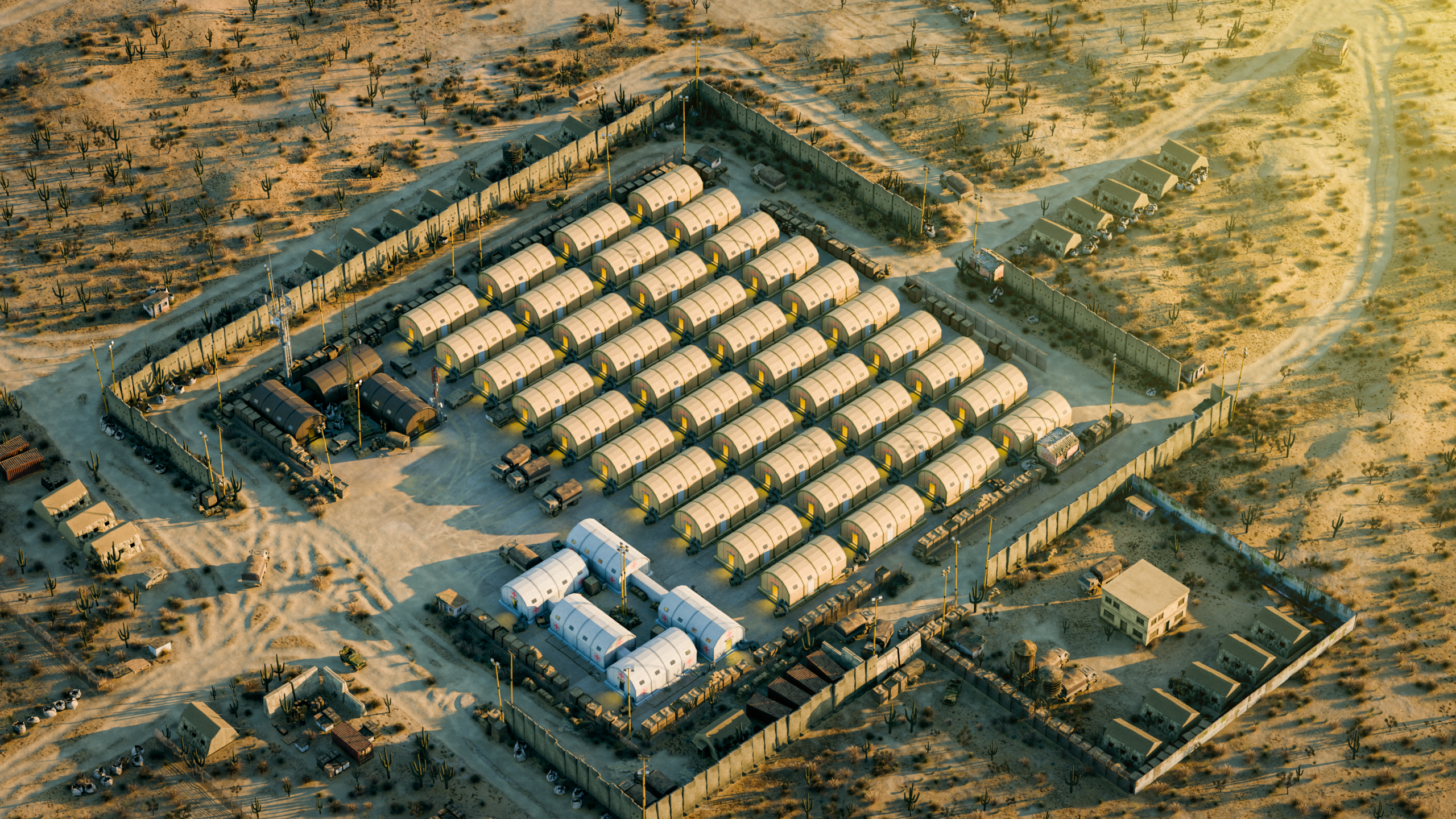
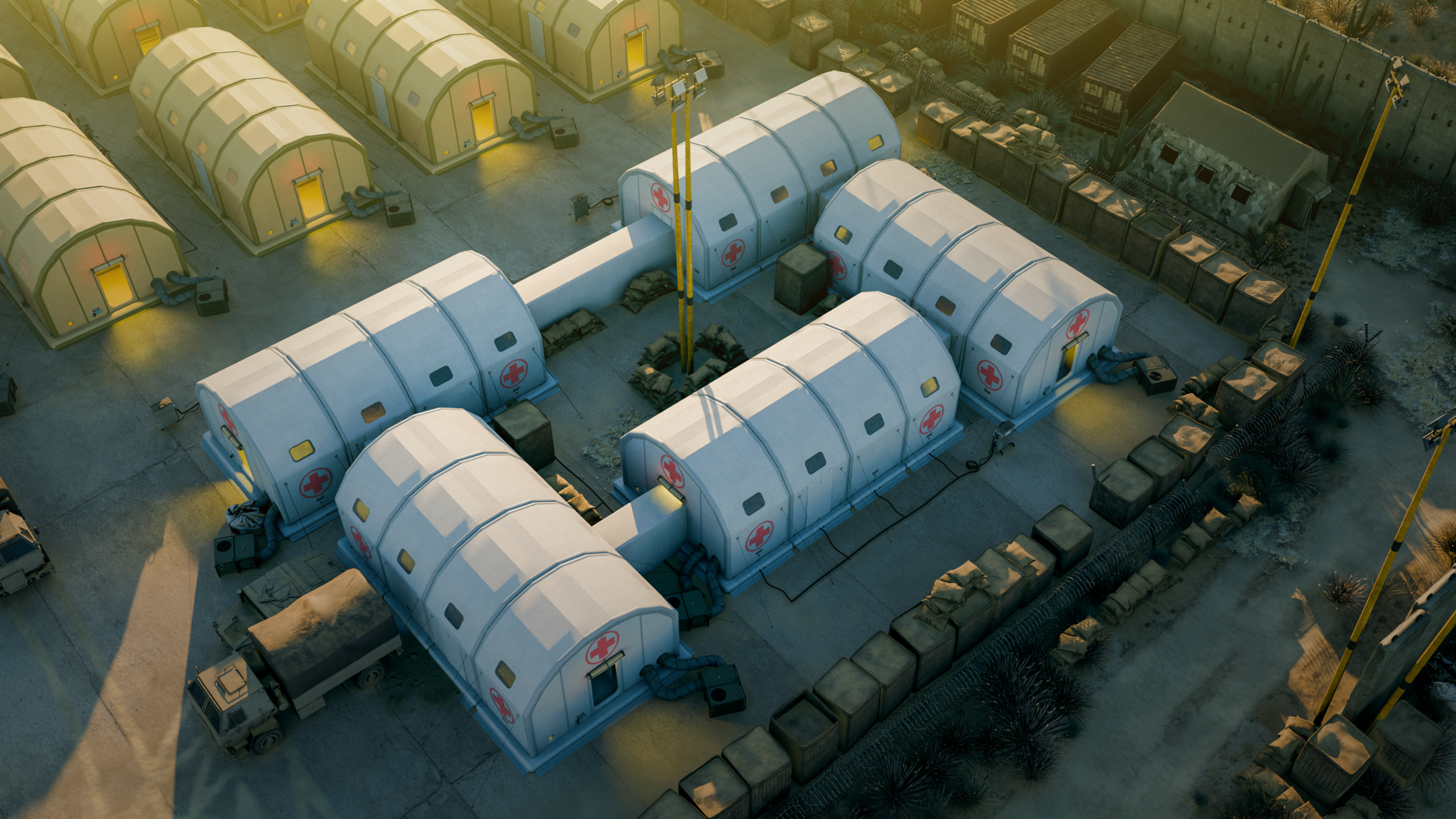
Built for Austere Operations Where Speed, Energy, and Logistics Matter
Bare base camps are rarely built in perfect conditions. They are established in remote, austere, contested, damaged, or infrastructure-limited environments where the mission cannot wait for conventional construction.
- Hardline shelter systems are designed to support:
- Special Operations Forces and SOCOM mission profiles
- Forward operating sites and expeditionary base camps
- Joint Operations Centres and tactical command posts
- Humanitarian shelter and emergency relief operations
- Disaster response camps and mass care infrastructure
- Field hospitals, triage centres, and medical support facilities
- Billeting, planning, maintenance, logistics, and sustainment areas
- Temporary base infrastructure for military, government, NGO, and disaster response teams
Where legacy shelter systems often require frames, poles, loose canvas, extensive manpower, higher packed cube, and heavy generator support, Hardline is designed to provide a faster,
quieter, stronger, more insulated, and more efficient alternative.
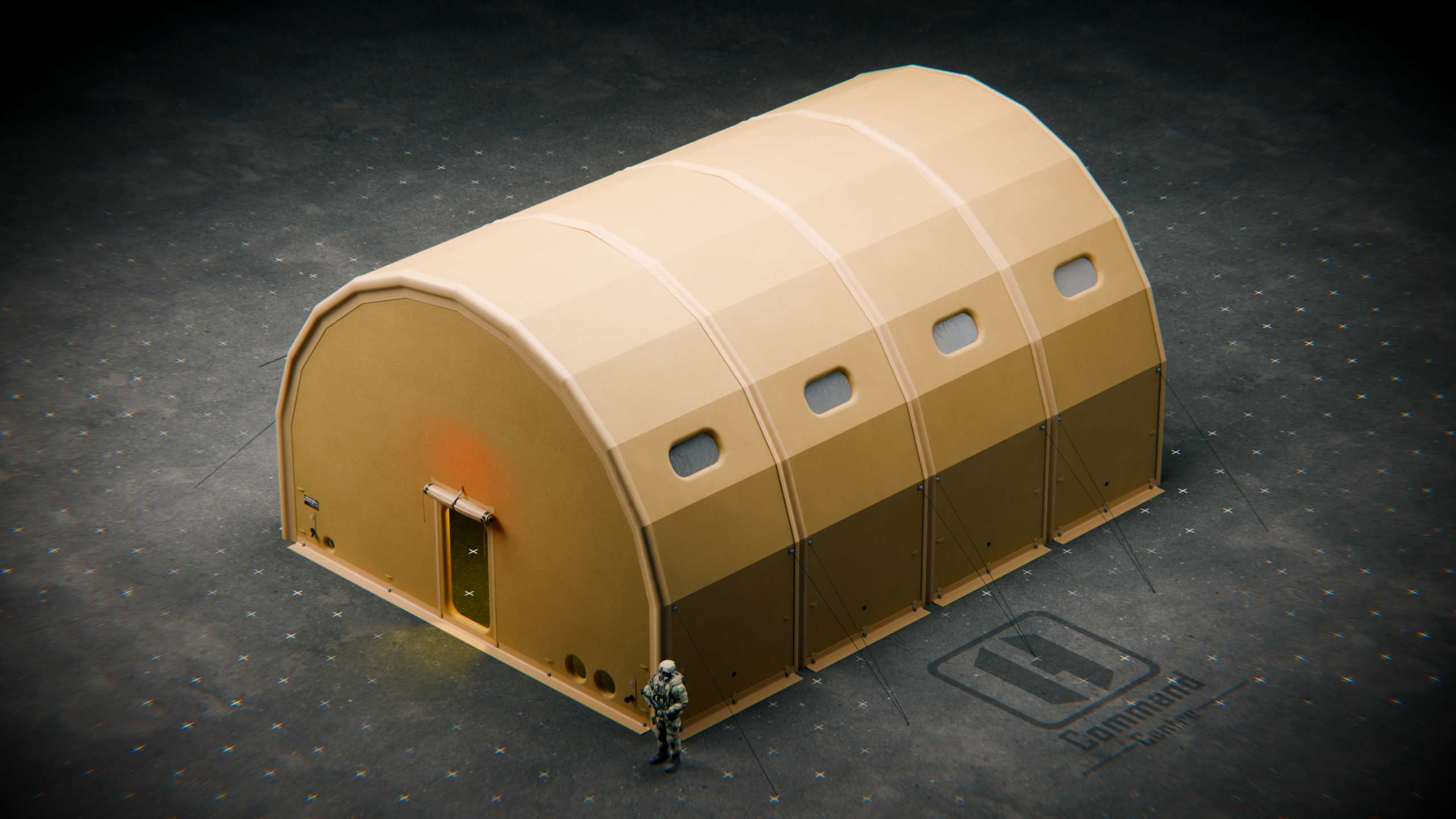
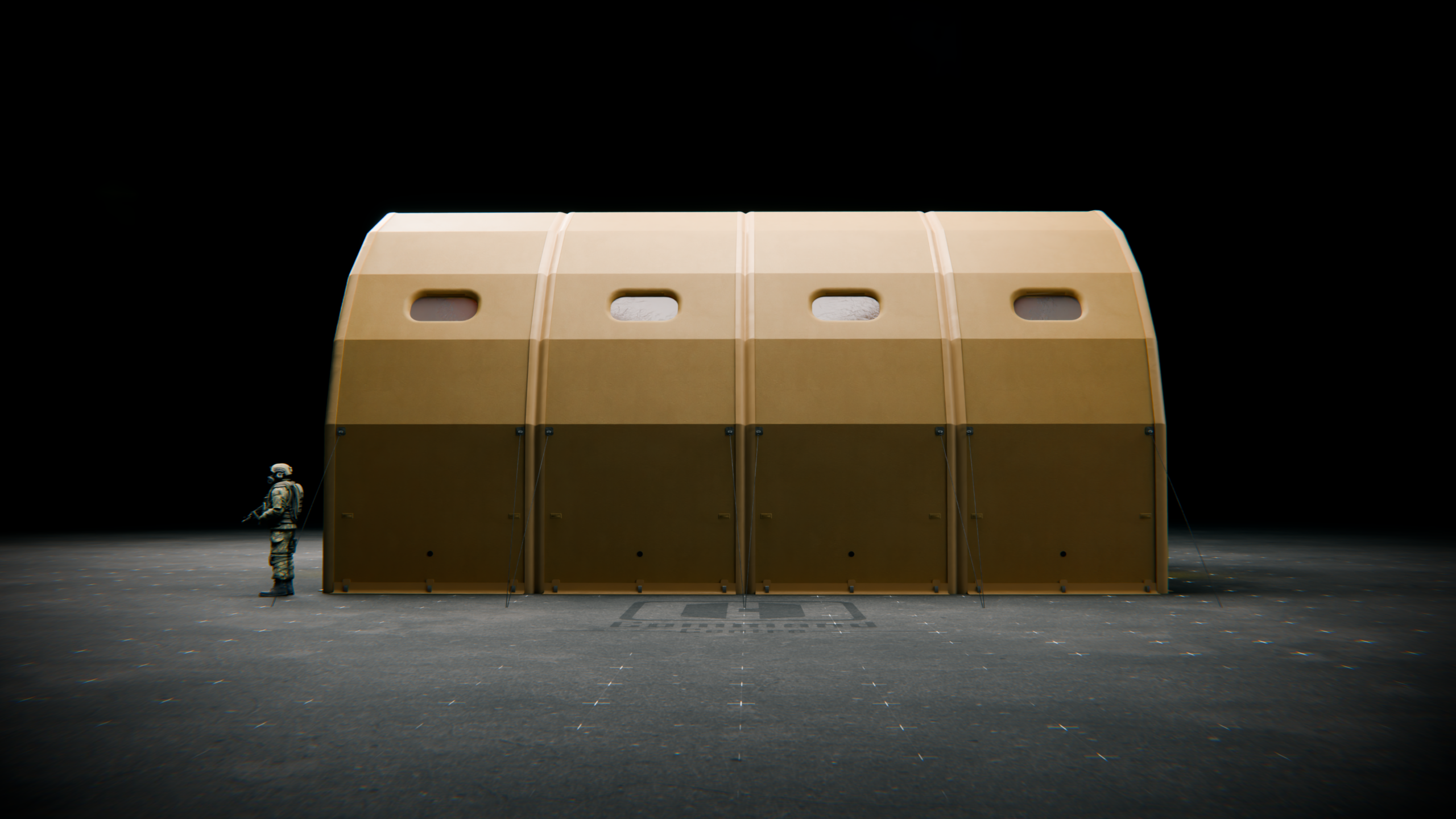
high-performance thermoplastic polyurethane (TPU) material
Hardline Global products are constructed using high-performance thermoplastic polyurethane (TPU) materials specifically selected for their all-weather resilience.
TPU offers several advantages over traditional rigid materials:
• Maintains flexibility in extreme low temperatures
• Highly resistant to cracking or brittle failure
• Excellent durability under mechanical stress
• Strong resistance to abrasion and environmental exposure
• Lightweight yet structurally resilient
Because TPU retains elasticity even in subzero environments, Hardline Global systems continue to function reliably in conditions that would cause traditional materials to fail.
Spectre Shelter XL: Structural Fabric Shelter Technology Without Rigid Members
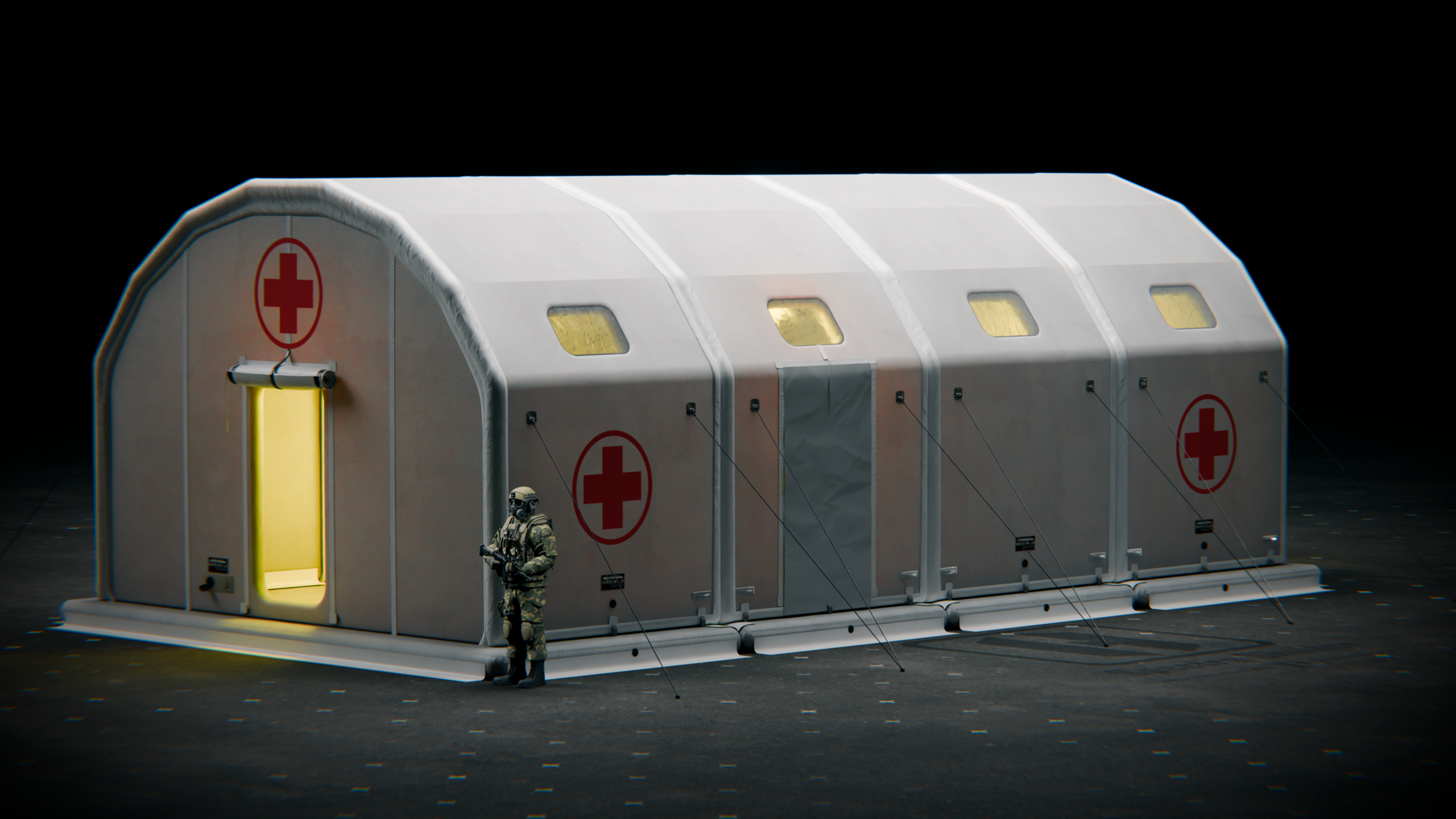
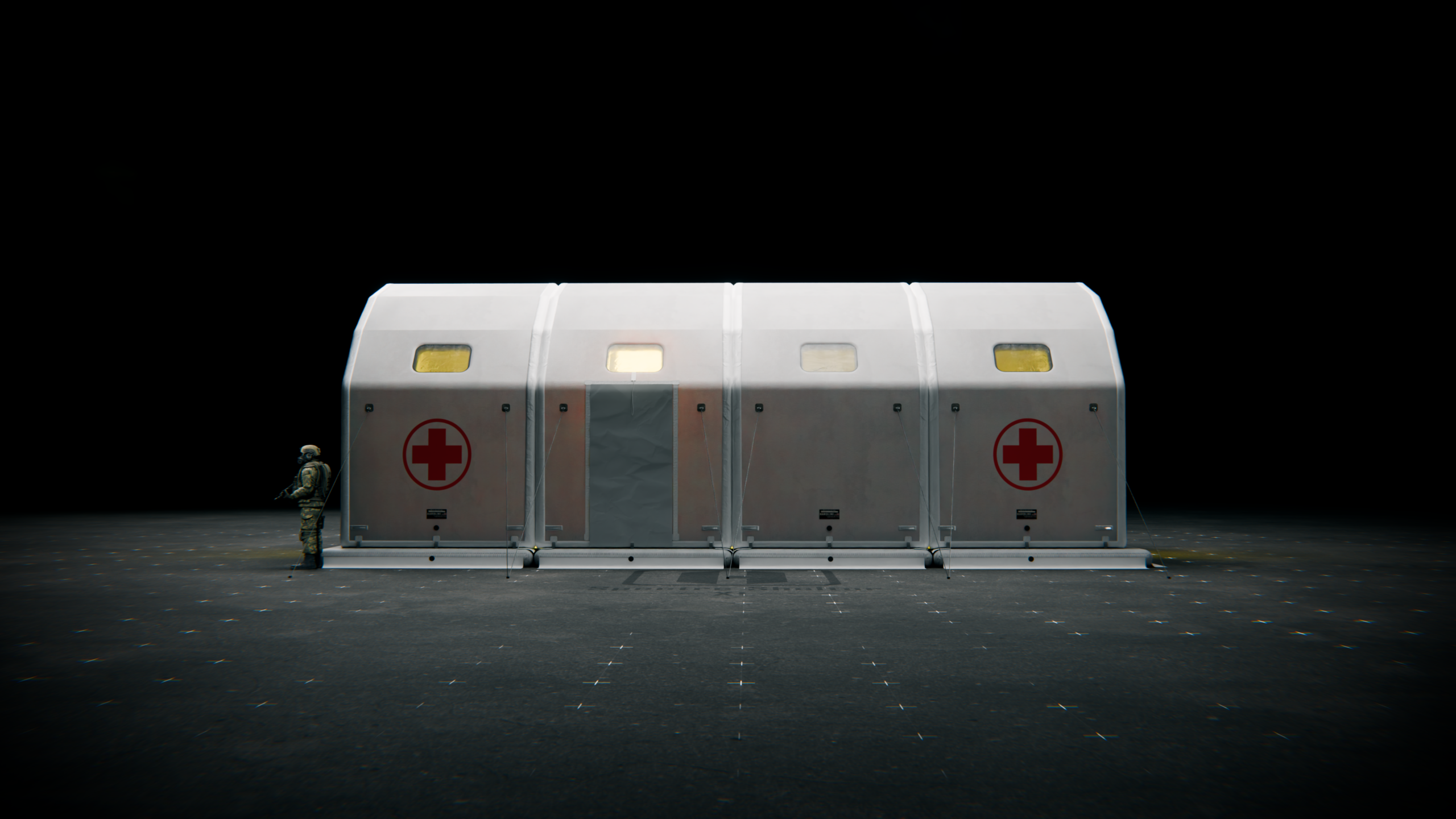
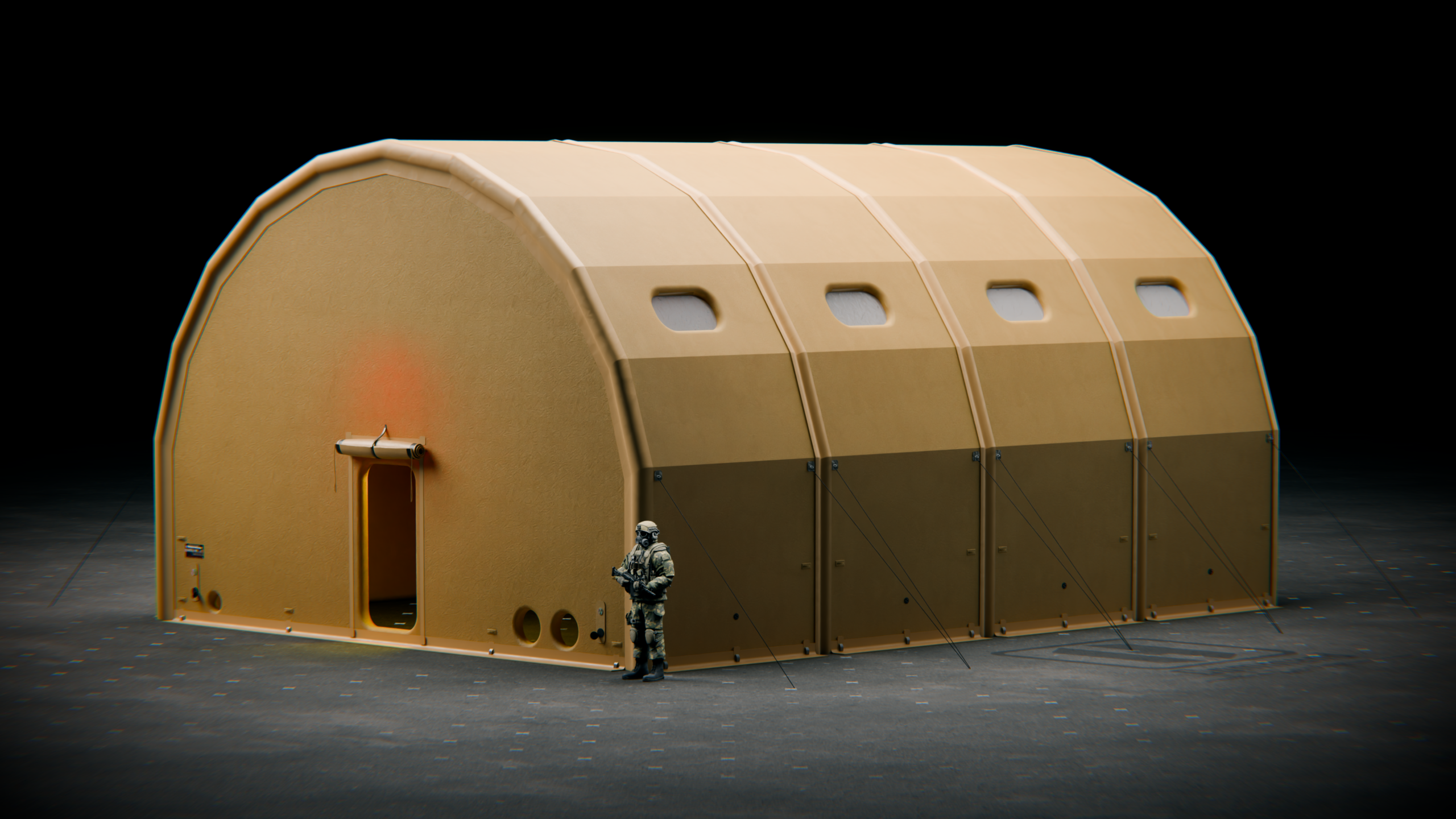
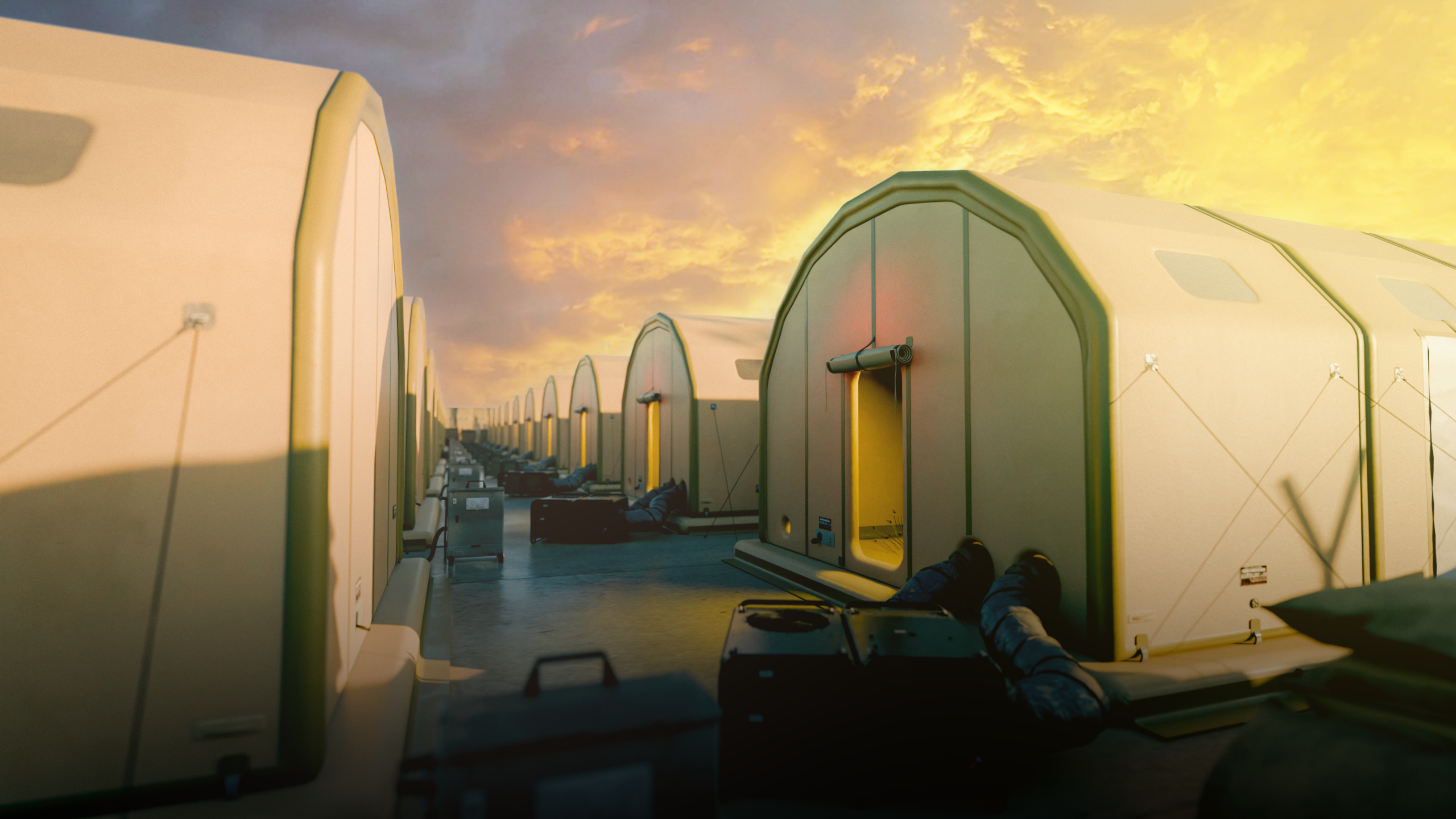
The Hardline Spectre Shelter XL is not a conventional tent. It is a structural inflatable shelter system using advanced TPU-coated drop-stitch fabric technology.
The result is a rigid, high-performance shelter platform that eliminates the need for traditional frames, poles, beams, trusses, and heavy rigid structural members.
Core advantages:
- No rigid structural members
- Structural fabric architecture
- Rapid setup in approximately 30 minutes per shelter
- Insulated air-gap barriers on all sides
- Reduced heating and cooling demand
- Reduced generator burden
- Lower fuel logistics requirement
- Reduced acoustic signature
- Thermal-signature mitigation
- No tent flapping
- No leaking canvas
- Weatherproof construction
- High wind-resistant design
- Modular vestibule connections
- Interconnectable on all four sides
- Low cube for transport and storage
- Mission-configurable for multiple use cases
Hardline shelters are designed to replace legacy framed shelter systems, traditional expeditionary tents, canvas-based military shelters, and outdated base camp infrastructure with a vastly
superior expeditionary shelter platform.
Containerised Bare Base Camp Deployment
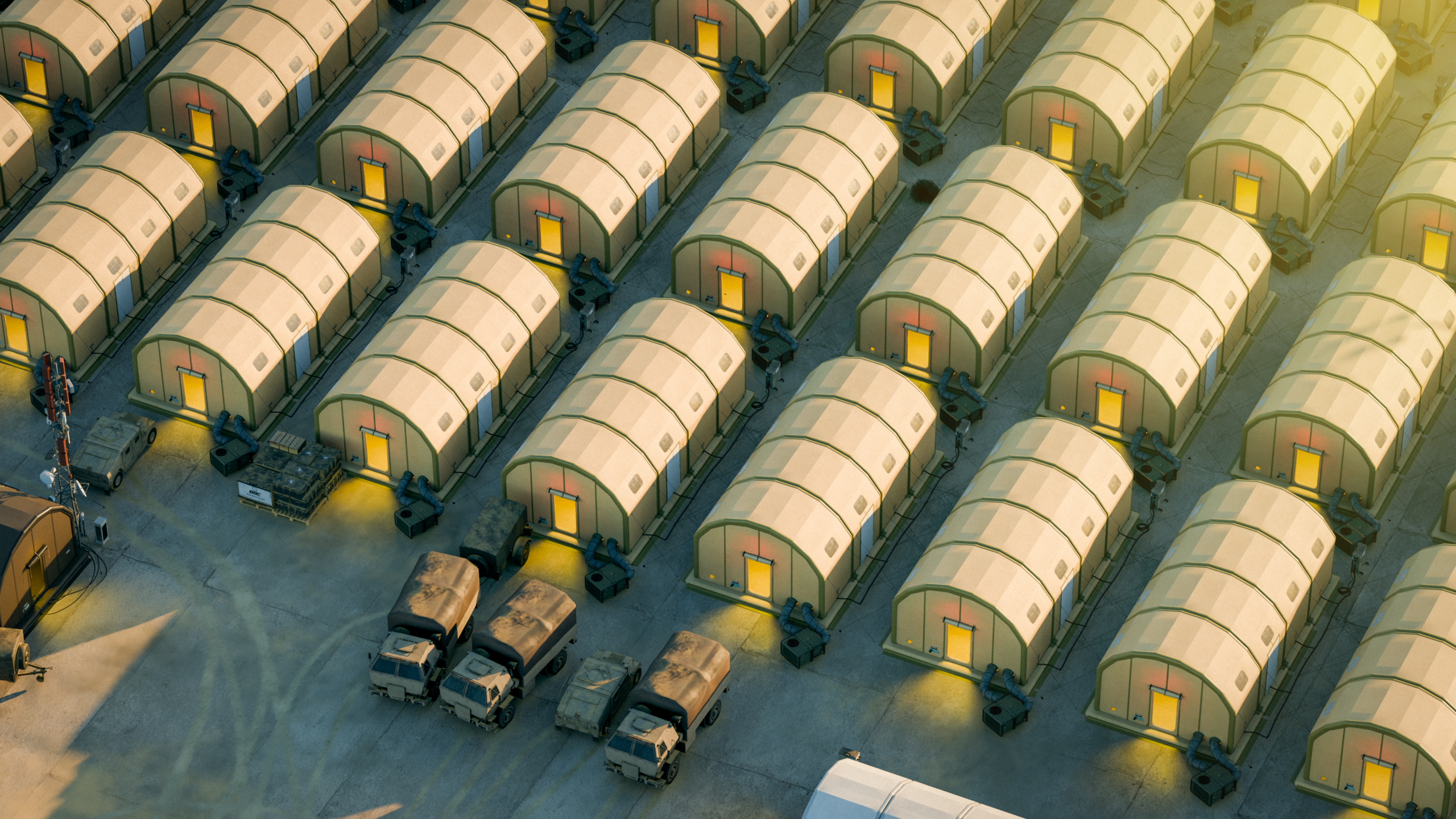
Hardline Bare Base Camp Systems are designed around practical logistics. Depending on shelter size, selected configuration, accessories, pumps, vestibules, flooring, HVAC, power systems, and mission package, approximately 20 to 60 shelters can fit into a single 40 ft container. This enables significant transport efficiency for military, humanitarian, and disaster-response operations requiring rapid mass deployment.
Containerised deployment supports:
- Faster international shipping
- Reduced storage footprint
- Lower air, sea, and land transport burden
- Rapid warehouse-to-mission mobilisation
- Preconfigured shelter packages by mission type
- Efficient staging for disaster season or contingency operations
- Scalable deployment from small teams to large bare base camps
Hardline can configure shelter packages for small-unit operations, SOCOM-style distributed sites, medical response, mass care sheltering, command operations, logistics nodes, and large-
scale humanitarian support.
Reduce Fuel Demand and Base Camp Sustainment Burden
In forward-deployed and disaster-affected environments, energy is not just a cost issue. It is a mission issue. Every gallon of fuel that must be moved to a remote base, disaster zone, or forward operating site requires transport, security, labour, storage, and handling. In military environments, fuel convoys increase exposure and risk.
In humanitarian environments, fuel dependency increases
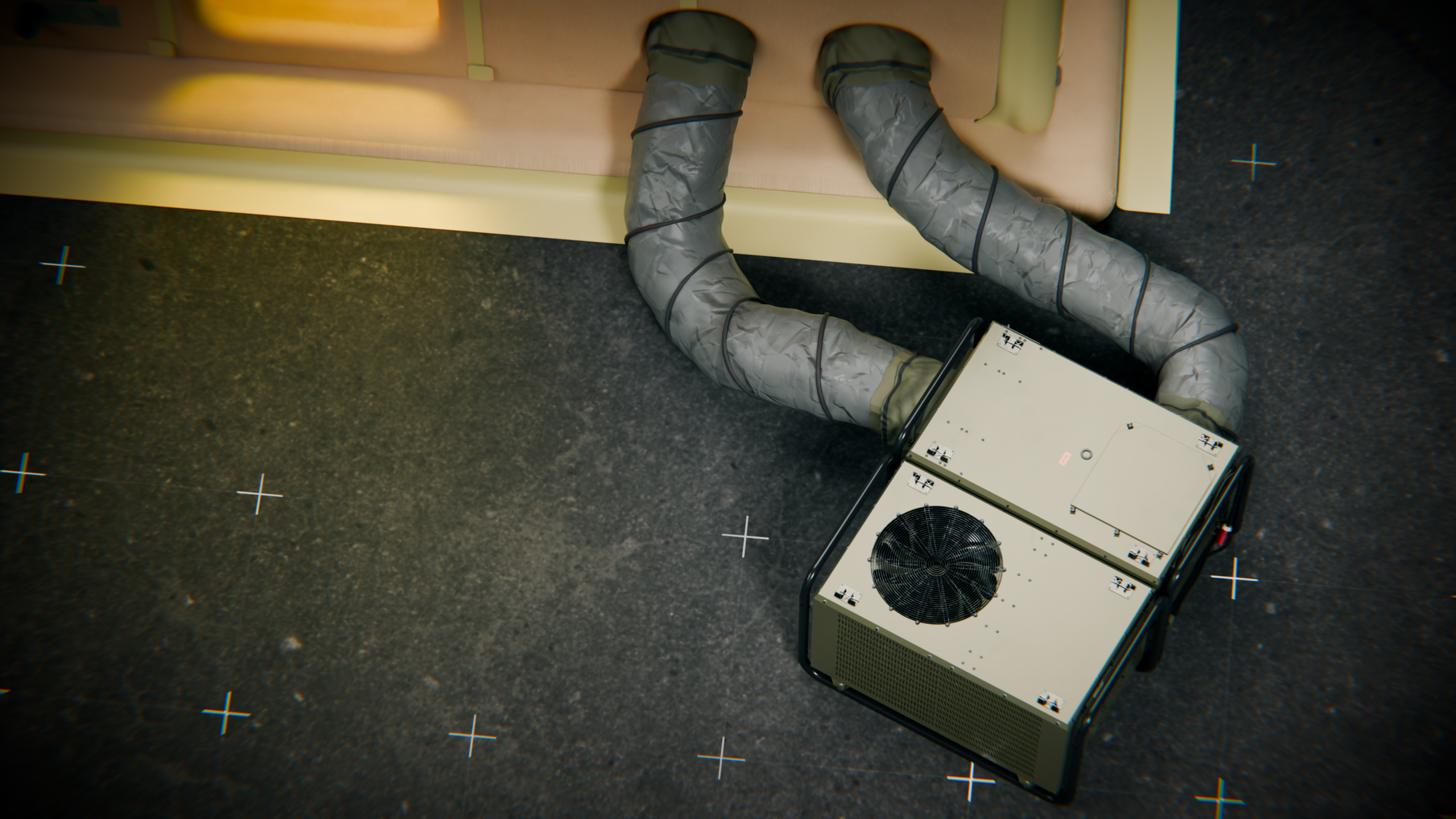
operating complexity and slows response. Hardline shelters are designed to reduce this burden through insulated air-gap barriers built into the shelter system.
Lower energy demand means:
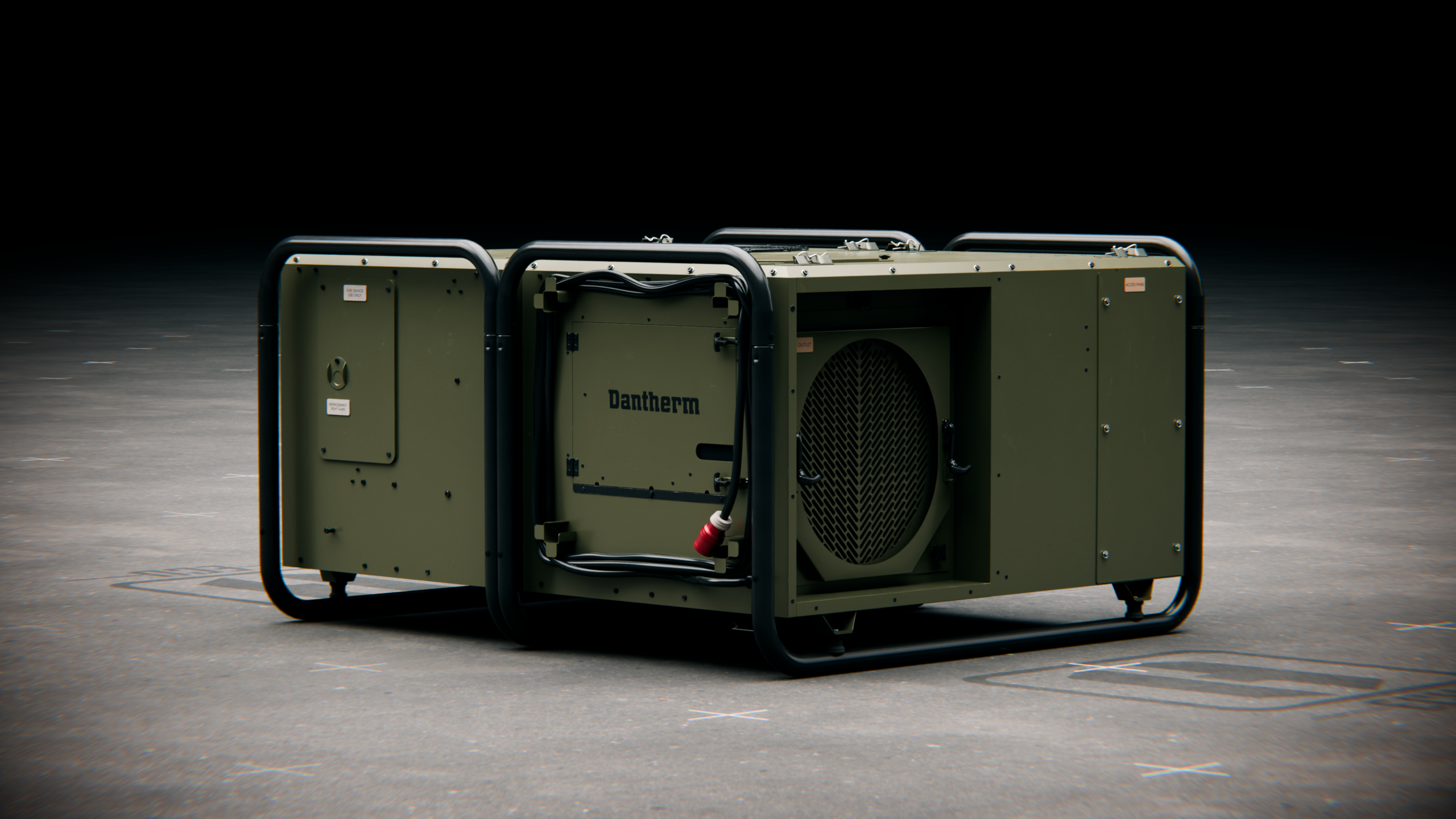
- Reduced ECU and HVAC runtime
- Reduced generator load
- Reduced liquid fuel requirement
- Lower resupply frequency
- Smaller sustainment footprint
- Less noise from power generation
- Improved camp resilience
- Better interior conditions for operators, patients, responders, and displaced persons
Hardline shelters can be supported by solar sustainment packages, low-power inflation sustainment systems, or the Hardline HL-600/1000 inflation system, depending on operational requirements.
Interconnectable Shelter Systems for Mission-Ready Base Camp Layouts
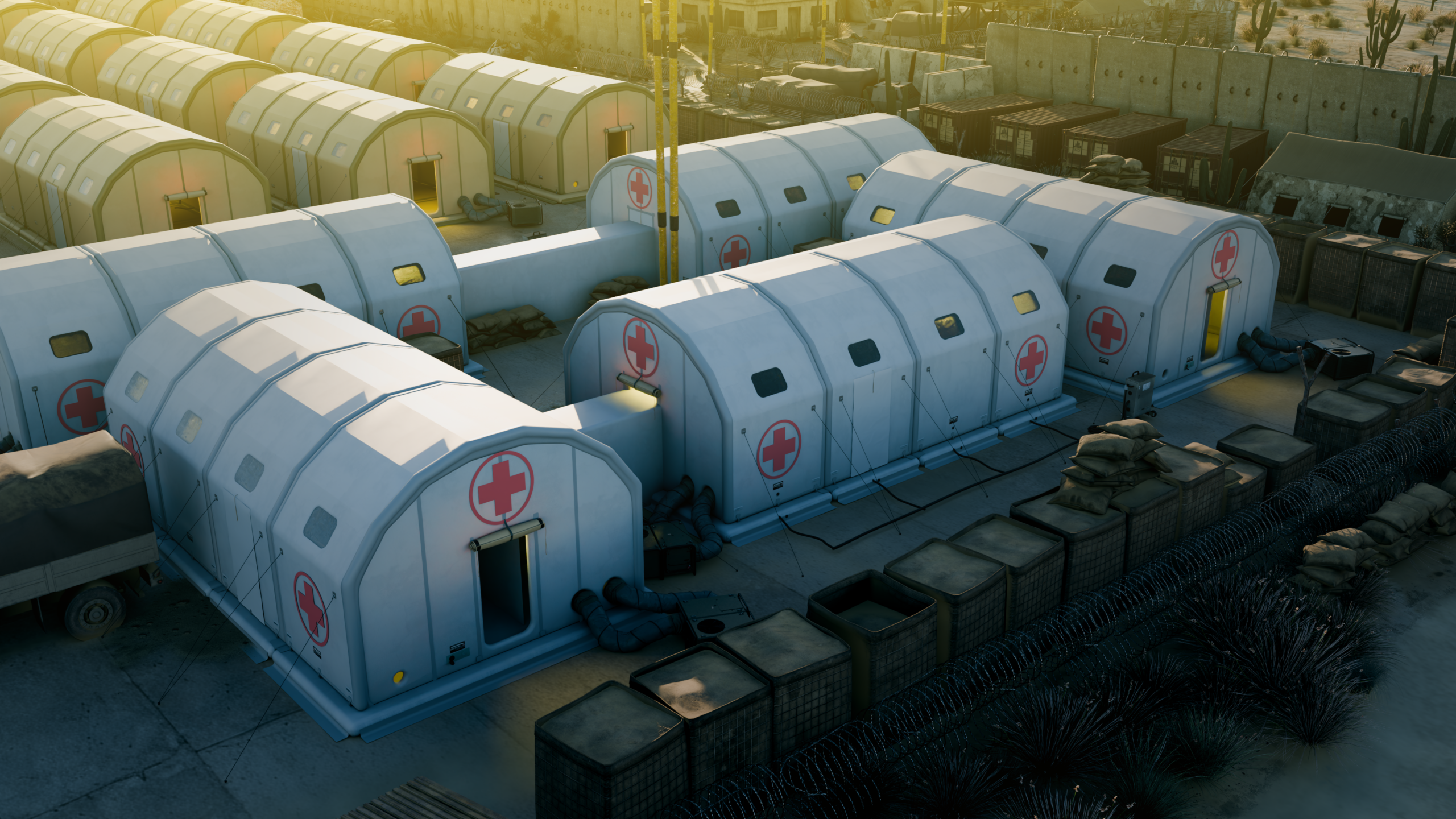
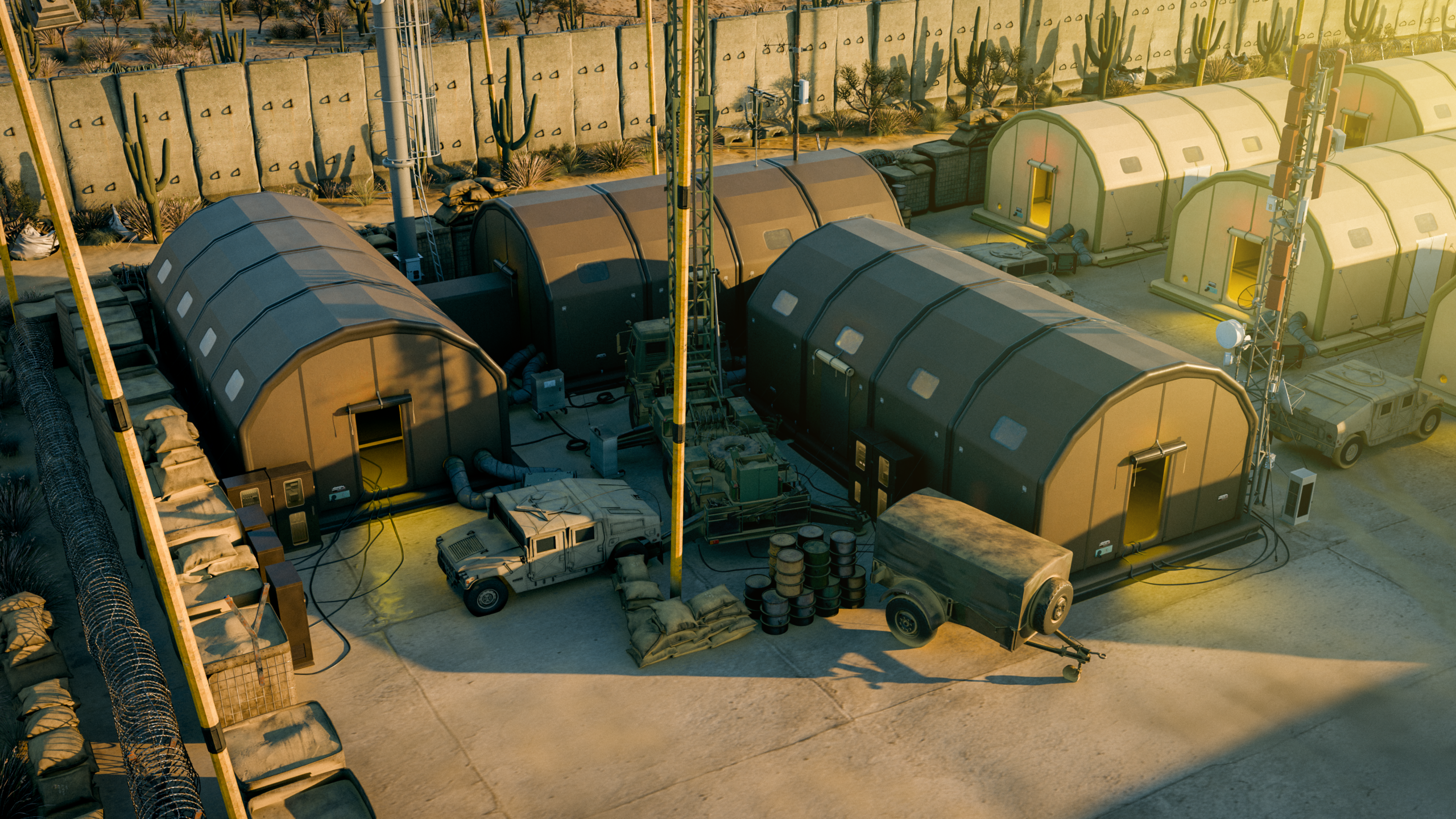
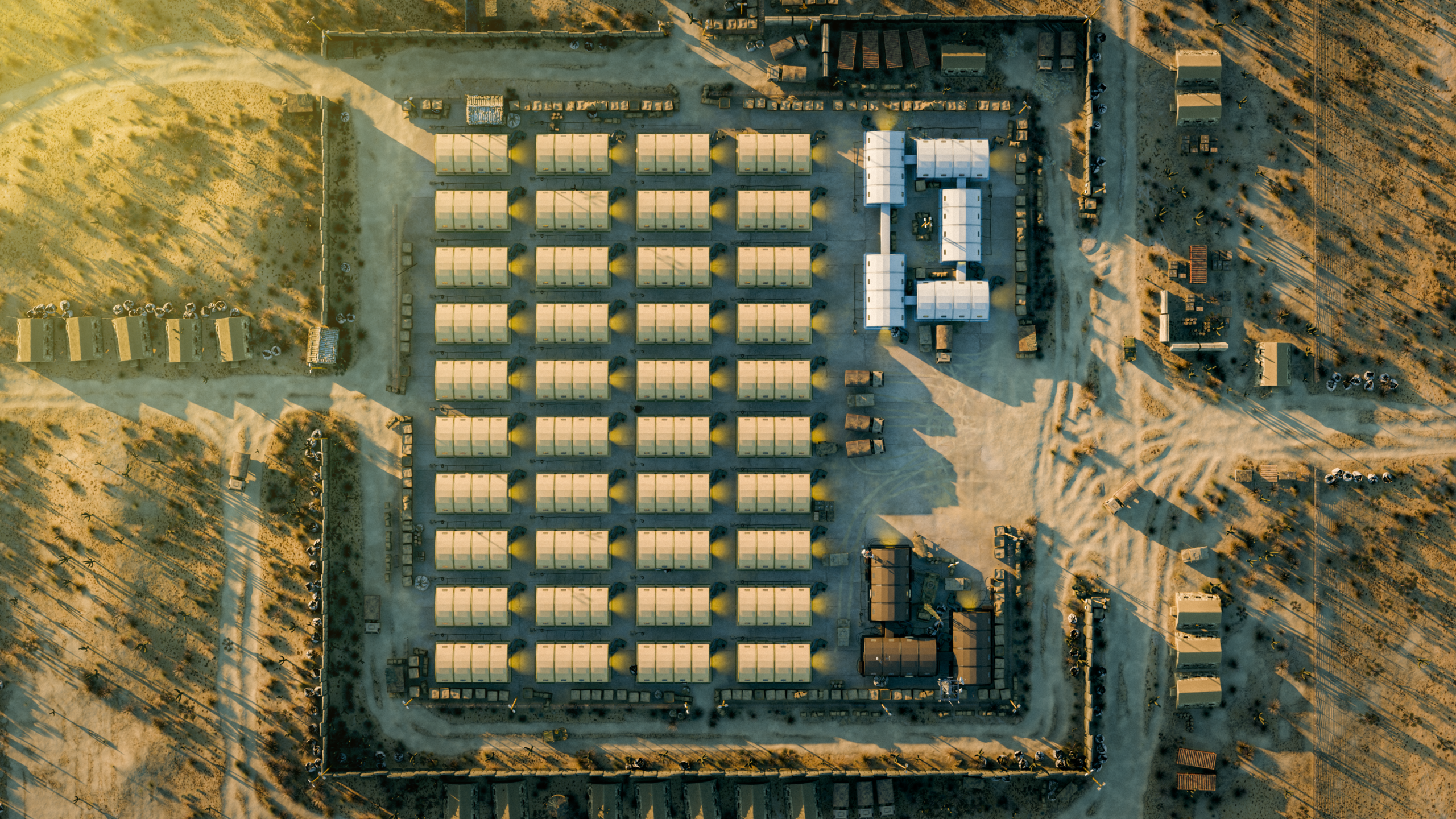
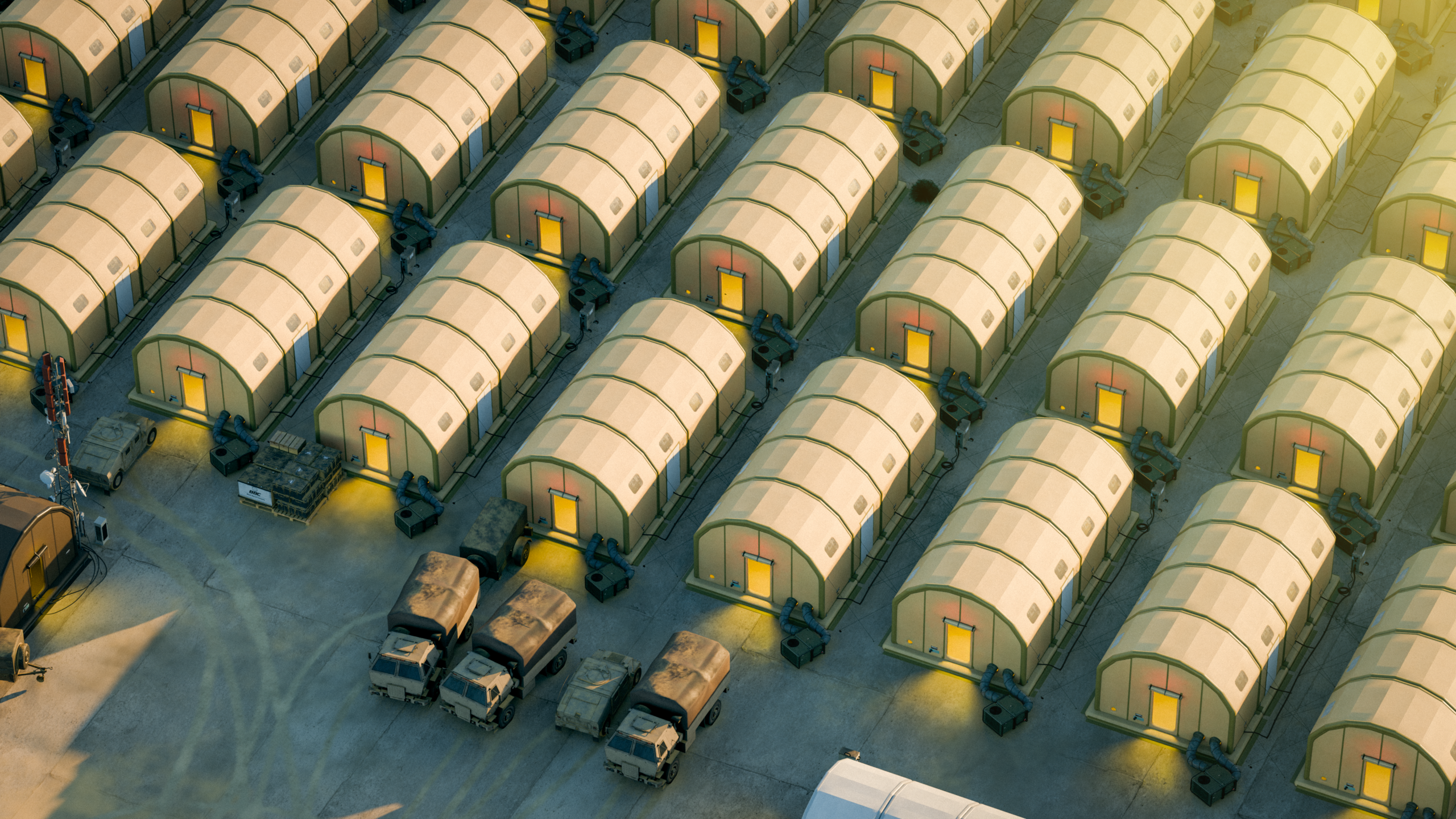
Hardline shelters are designed to connect on all four sides using integrated vestibule systems. This enables commanders, planners, emergency managers, and humanitarian response teams to rapidly build functional and scalable camp layouts in any environment.
A single shelter can operate independently, or multiple shelters can be linked together to form a larger, fully integrated operational compound.
Example Shelter Configurations
Command and Control Zone
- JOC shelter
- Operations planning shelter
- Communications shelter
- Briefing shelter
- Intelligence workspace
- Secure meeting areas
Medical Support Zone
- Triage shelter
- Treatment shelter
- Surgical support shelter
- Recovery shelter
- Pharmacy and supply areas
- Clinician rest spaces
Billeting Zone
- Sleeping shelters
- Rest and recovery areas
- Climate-controlled quarters
- Privacy partitions
- Personnel welfare spaces
Humanitarian Shelter Zone
- Family sheltering units
- Temporary accommodation
- NGO operations spaces
- Registration and intake areas
- Distribution centers
- Child-safe spaces
- Medical assistance areas
Logistics and Sustainment Zone
- Storage facilities
- Equipment maintenance areas
- Rations and water storage
- Power generation zones
- Tools and spare parts storage
- Mission support functions
JOC Shelters and Command Post Shelter Systems
Hardline JOC Shelter Systems
Hardline JOC (Joint Operations Center) shelter systems are purpose-built to support tactical command, mission planning, communications, intelligence coordination, and field operations.
For SOCOM, SOF, defense organizations, emergency response teams, and humanitarian agencies, the ability to rapidly establish a fully functional command node is critical to mission success.
Ideal Applications
Hardline JOC shelters are ideally suited for:
- Joint Operations Centers (JOC)
- Tactical command posts
- Forward command elements
- Emergency operations centers (EOC)
- Disaster response coordination centers
- NGO coordination hubs
- Medical command shelters
- Communications and planning rooms
- Mission briefing and debriefing spaces
Built for Operational Performance
Unlike traditional flapping canvas or frame-dependent shelters, Hardline’s structural shelter systems provide a significantly enhanced operational environment.
Key advantages include:
- Increased structural stability
- Reduced noise for improved focus and communication
- Superior insulation for extreme environments
- A more professional, mission-ready interior space
These features ensure command teams can operate efficiently, make critical decisions, and maintain focus—even in high-pressure, austere conditions.
Designed for SOCOM, SOF, and Distributed Operations
Special Operations Forces operate with unique requirements: speed, reduced footprint, mobility, low signature, energy discipline, and mission adaptability.
Hardline shelter systems are engineered to meet these demands through a rapidly deployable and scalable platform. The system minimizes structural complexity, pack volume, acoustic disturbance, and energy burden—without compromising performance.
SOCOM-Relevant Benefits
- Low cube logistics
- Rapid site establishment
- Reduced energy demand
- Reduced thermal and acoustic signature
- No rigid frame components
- Smaller sustainment footprint
- Modular and scalable compound design
- Compatibility with distributed operations
- Optimized for austere and remote environments
- Operator-focused interior conditions
- Improved rest environment (no tent flapping)
- Mission-configurable shelter layouts
Hardline does not simply provide a shelter.
Hardline delivers a deployable infrastructure system for modern operations.
Humanitarian and Disaster Response Applications
- Emergency sheltering
- Temporary accommodation
- Non-traditional sheltering
- Field medical facilities
- Triage and treatment centers
- Responder accommodation
- Incident command centers
- NGO coordination spaces
- Distribution hubs
- Communications shelters
- Mobile logistics bases
- Recovery support facilities
Hardline shelters provide weatherproof, insulated, and rapidly deployable environments capable of supporting both emergency response teams and affected populations.
For displaced families, responders, patients, and medical personnel, a quieter, better-insulated, and more weather-resistant shelter is more than a technical advantage—
it is a human advantage.
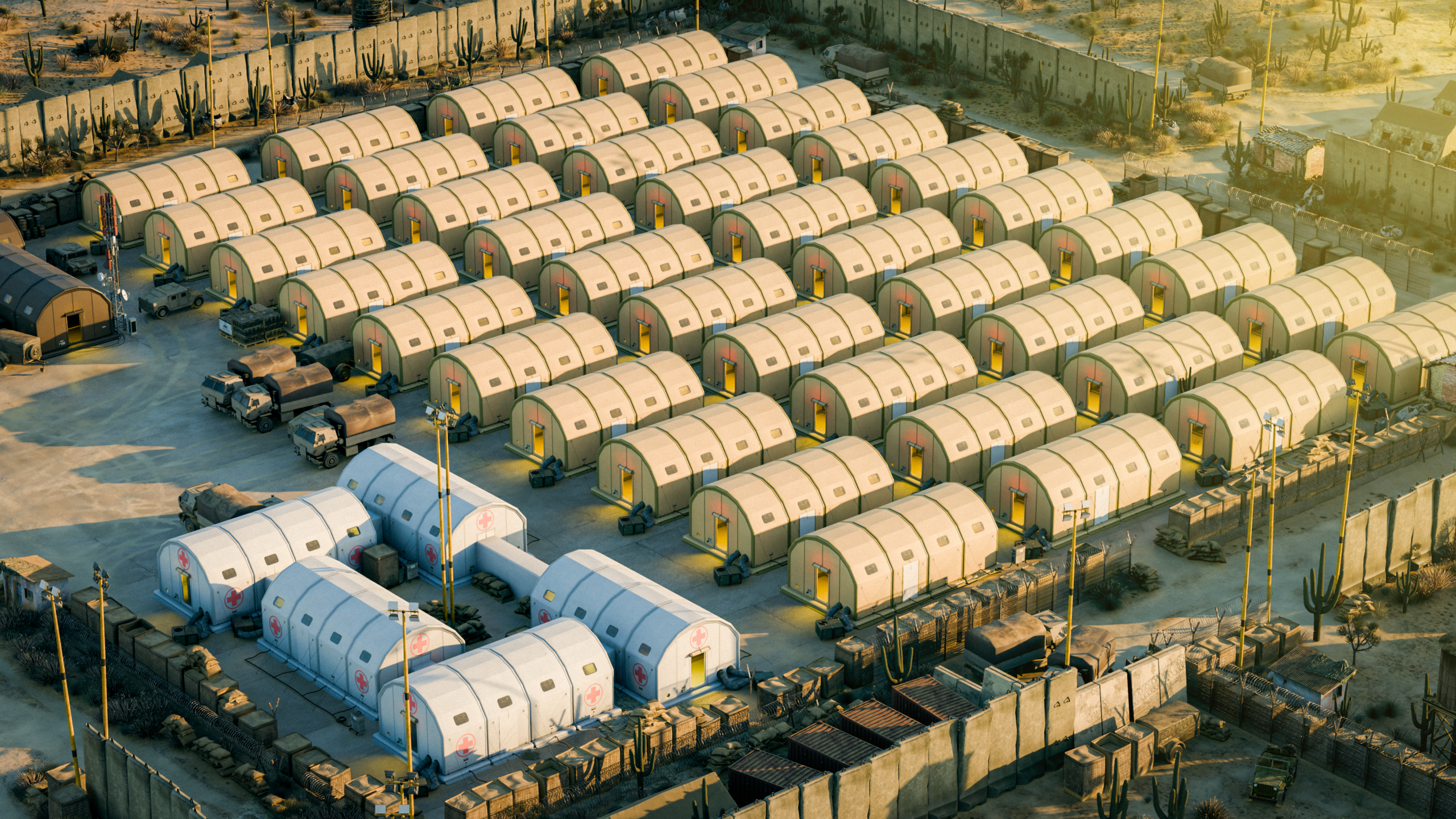
Bare Base Camp Packages
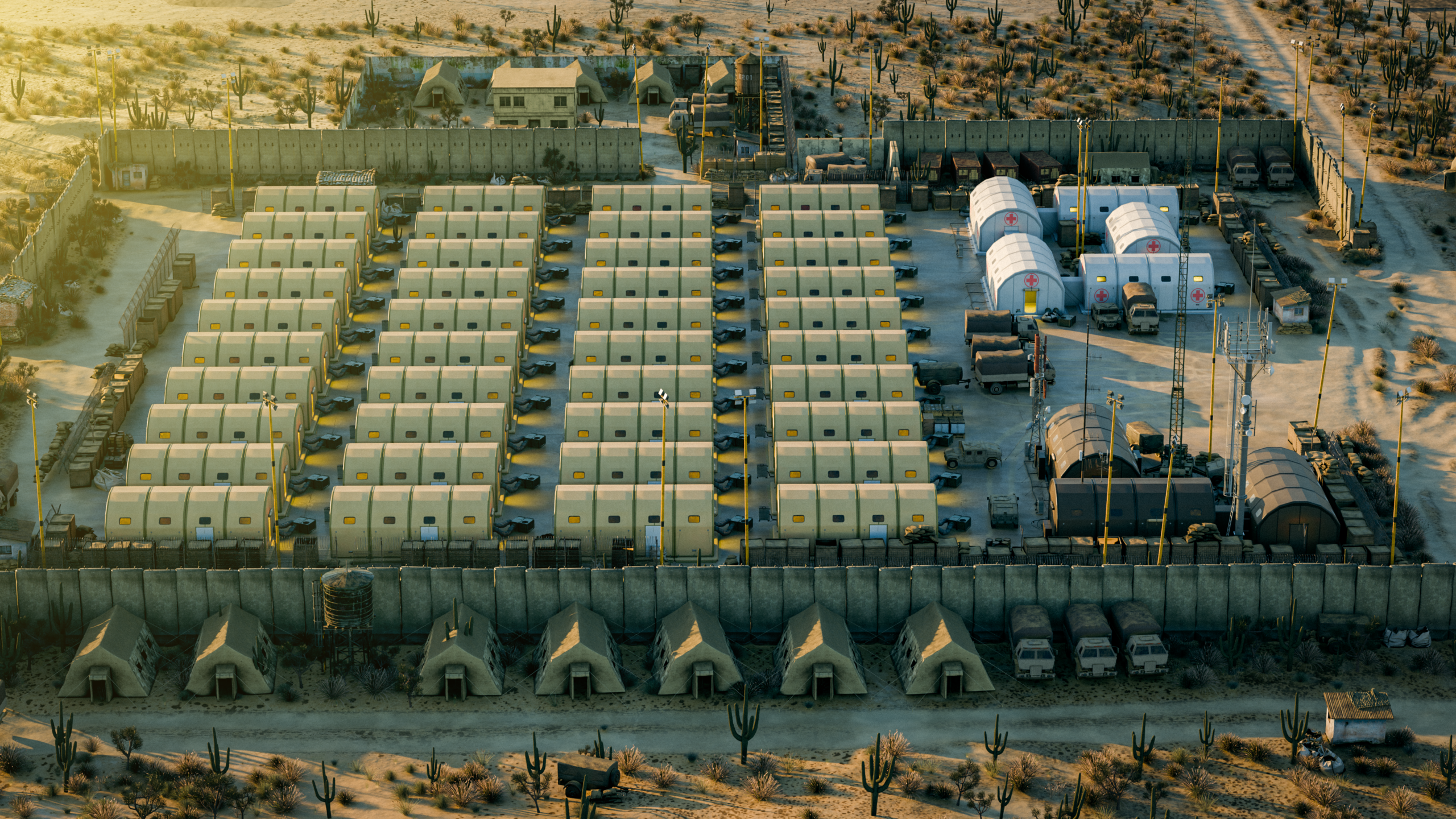
Hardline provides fully configurable bare base camp shelter packages tailored for military, government, disaster response, and humanitarian operations. Each package is designed to meet specific mission requirements while maintaining scalability, mobility, and operational efficiency.
Package 1: Small Unit / SOF Site
Designed for small teams, distributed operations, low-footprint missions, and rapid deployment.
Typical Components:
- 2 to 6 shelters
- Command and planning shelter
- Billeting shelter
- Medical or casualty holding shelter
- Power and inflation sustainment package
- Vestibule connectors
- Optional solar sustainment system
Package 2: JOC / Command Post Package
Designed for command, communications, planning, intelligence, and field coordination.
Typical Components:
- JOC shelter
- Briefing shelter
- Communications shelter
- Planning shelter
- Staff rest shelter
- Equipment and power shelter
- Fully vestibule-connected layout
Package 3: Field Medical Package
Designed for disaster response, military medicine, triage, stabilization, and expeditionary care.
Typical Components:
- Triage shelter
- Treatment shelter
- Recovery shelter
- Medical storage shelter
- Clinician rest shelter
- Patient flow vestibules
- Integrated power and HVAC systems
Package 4: Humanitarian Relief Camp
Designed for mass sheltering, displaced populations, emergency accommodation, and NGO operations.
Typical Components:
- Family sheltering units
- Registration shelter
- Medical support shelter
- Distribution shelter
- Staff operations shelter
- Logistics and storage shelter
- Modular expansion capability
Package 5: Full Bare Base Camp
Designed for large-scale deployments requiring fully integrated camp infrastructure.
Typical Components:
- 20 to 60 shelters per 40 ft container (configuration dependent)
- JOC and command zone
- Billeting zone
- Medical zone
- Logistics zone
- Maintenance zone
- Welfare and rest areas
- Interconnected vestibule layouts
- Solar, pump, and HL-600/1000 sustainment options
Hardline packages are built to scale—from small, agile deployments to fully integrated operational environments— delivering mission-ready infrastructure wherever it’s needed.
Built to Replace Legacy Shelter Systems
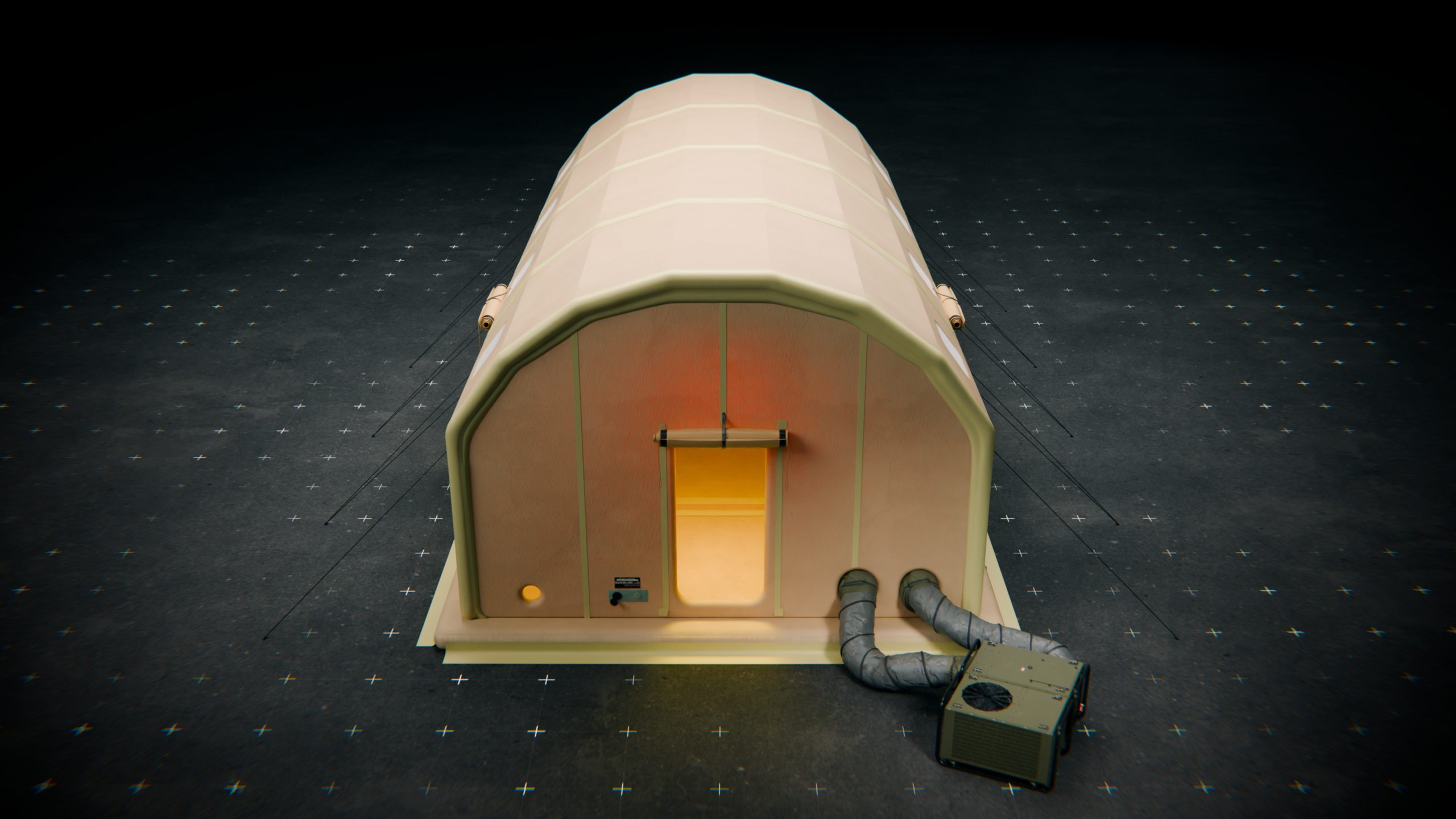
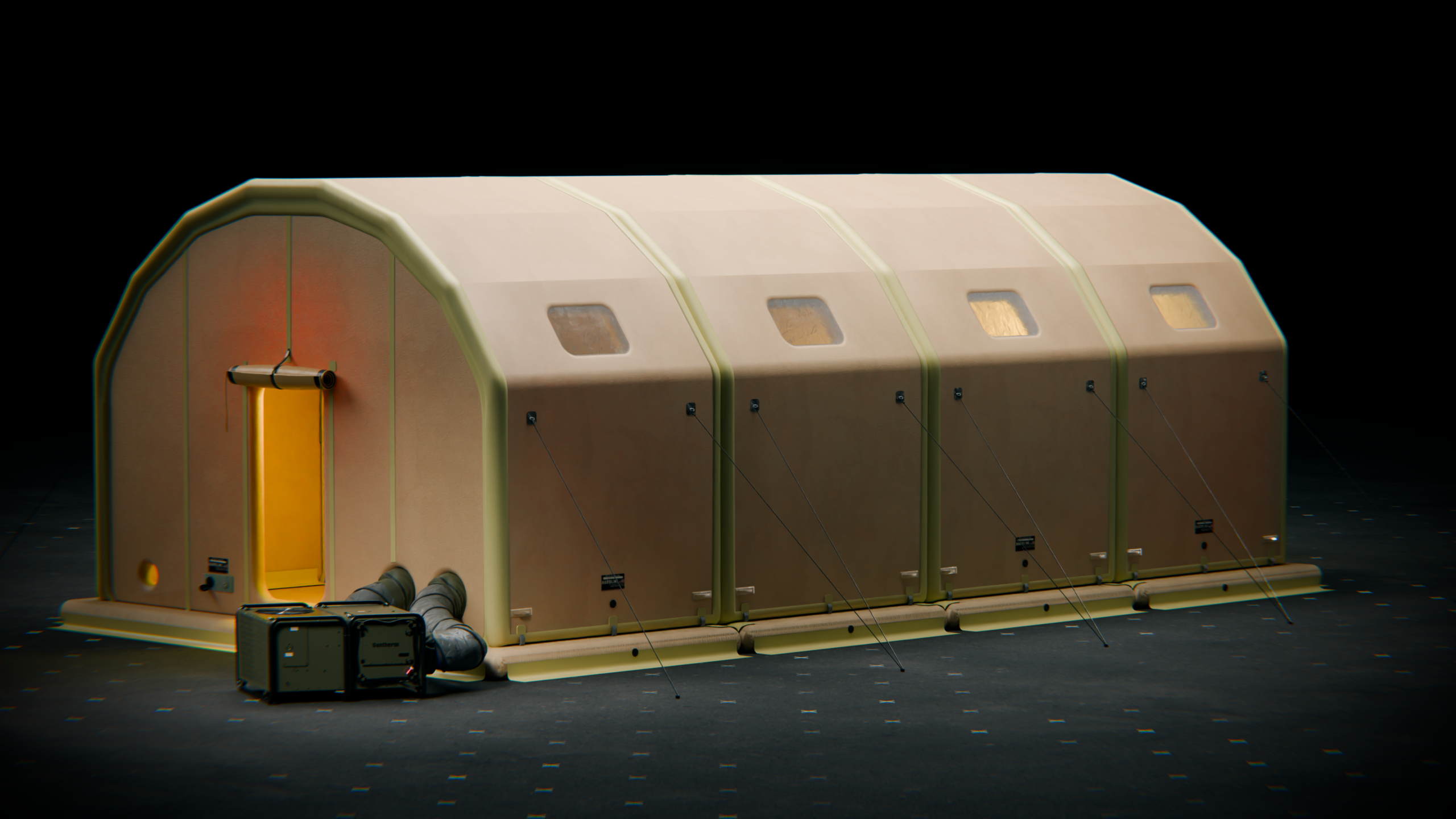
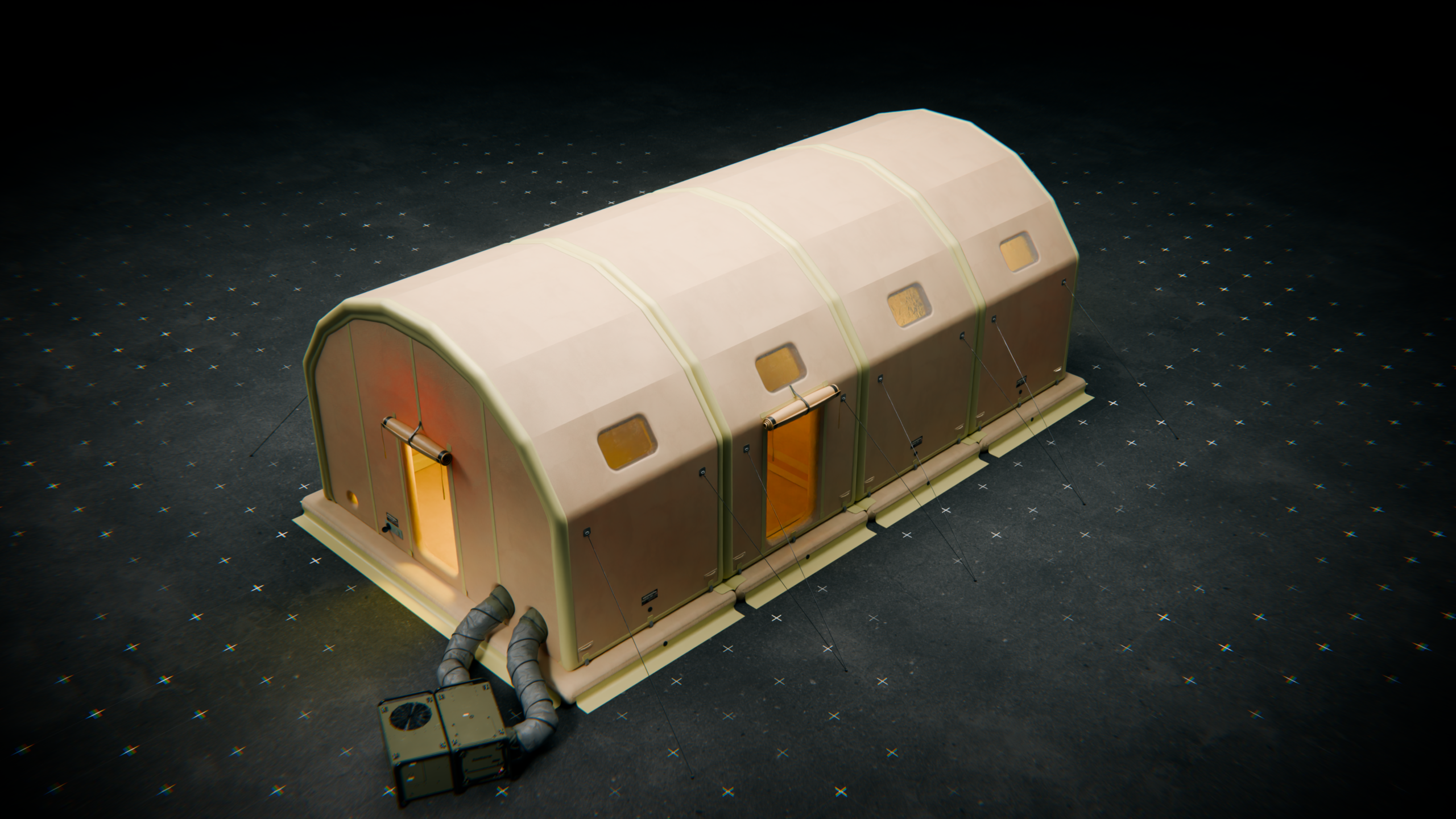
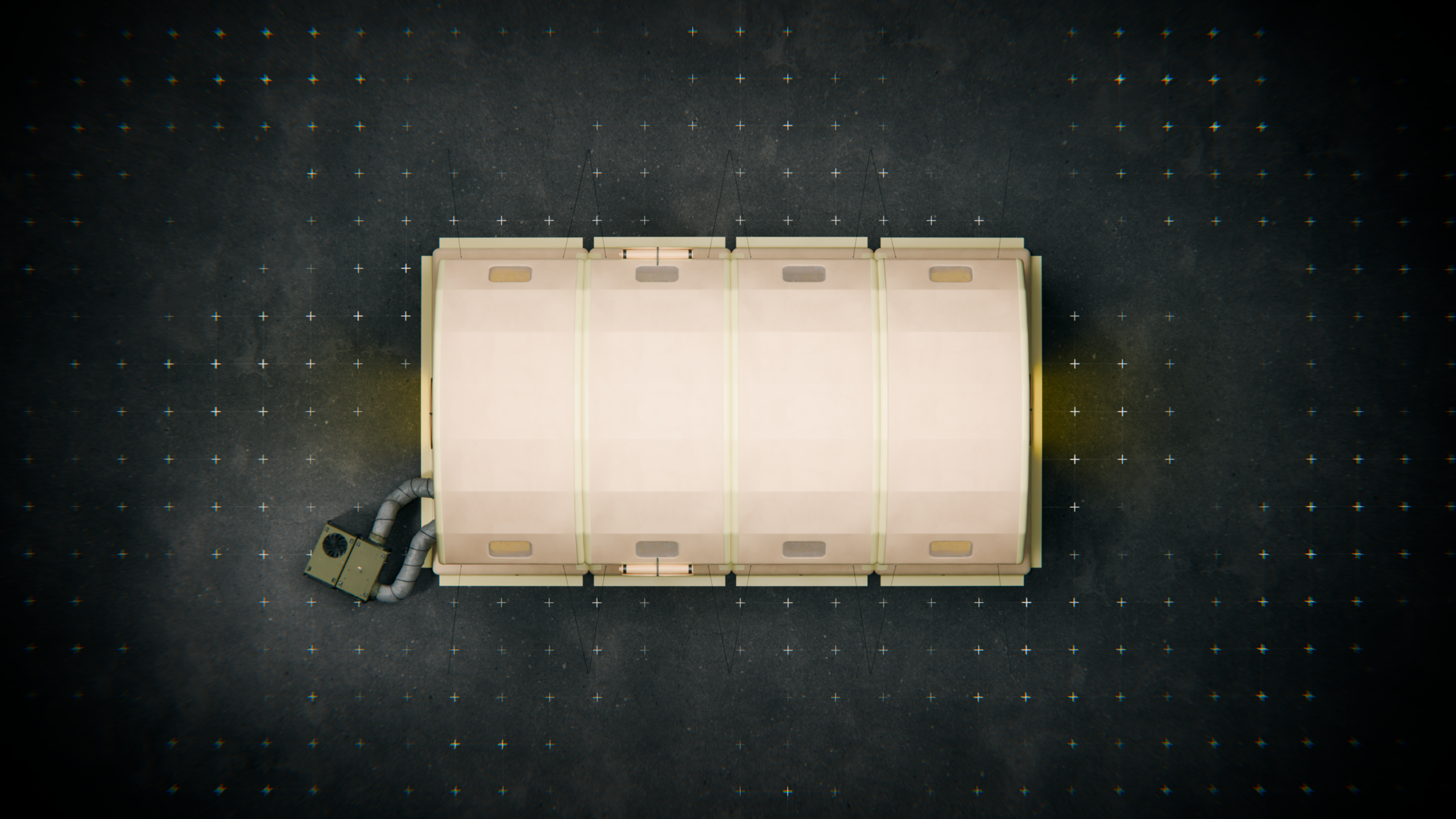
Hardline Spectre Shelter XL and JOC shelter systems are engineered to deliver a decisive upgrade over traditional military tents, framed expeditionary shelters, legacy canvas systems, and aging base camp infrastructure.
Legacy shelter systems were not designed for the speed, efficiency, and adaptability required in modern operations. As a result, they often introduce unnecessary logistical burden and operational limitations.
Limitations of Legacy Shelter Systems
Traditional systems commonly struggle with:
- High packed cube and inefficient transport volume
- Complex frame assemblies and multiple components
- Longer setup times requiring larger crews
- Water ingress, leaks, and exposure to harsh weather
- Excessive fabric movement and flapping in wind
- Poor sleep and recovery conditions for personnel
- High heating and cooling demands
- Heavy reliance on generators and fuel logistics
- Increased sustainment burden in the field
- Limited modularity and scalability
- Elevated acoustic and thermal signatures
The Hardline Advantage
Hardline addresses these challenges with a structural, insulated, rapidly deployable shelter ecosystem designed for modern expeditionary operations.
Key improvements include:
- Frame-free structural design for faster deployment and fewer failure points
- Reduced cube for more efficient transport and storage
- Integrated insulation for improved environmental control
- Lower energy demand and reduced generator dependency
- Quiet, stable interior environment with no fabric flapping
- Fully modular systems for scalable, mission-specific layouts
- Reduced thermal and acoustic signature for low-profile operations
From One Shelter to a Complete Bare Base Camp
Hardline systems are designed to scale seamlessly—from a single mission-critical shelter to a fully integrated bare base camp.
Whether supporting small-unit deployments or large-scale operations, Hardline enables rapid infrastructure build-out with minimal logistical strain.
Scalable Deployment Capability
A single 40 ft container can accommodate approximately:
- 20 to 60 shelters, depending on configuration
This includes:
- Shelter size and type
- Vestibule connectors
- Inflation and pump systems
- Solar sustainment packages
- Flooring and HVAC options
- Mission-specific accessories
Built for Speed, Flexibility, and Scale
This containerized efficiency allows organizations to:
- Pre-position complete shelter systems globally
- Rapidly deploy infrastructure when and where it’s needed
- Reduce transport and storage requirements
- Scale operations without redesigning the footprint
- Adapt configurations in real time based on mission demands
From SOF deployments to disaster response operations, Hardline provides the ability to establish shelter, command, medical, and support infrastructure at speed—without the limitations of legacy systems.
Hardline doesn’t improve on outdated shelter concepts it replaces them entirely with a modern, scalable infrastructure solution.
Request a Bare Base Camp Configuration
Hardline designs fully customized bare base camp configurations based on your specific operational requirements. Every solution is tailored to mission objectives, environmental conditions, and deployment constraints—ensuring optimal performance in the field.
We assess key factors including mission duration, climate, personnel count, transport method, power strategy, and deployment timeline to deliver a complete, mission-ready shelter system.
What We Support
Hardline provides planning and configuration support for:
SOCOM and SOF shelter layouts
Defense and government base camp planning
Disaster relief shelter deployment
Humanitarian shelter and settlement design
JOC (Joint Operations Center) and command post layouts
Medical and triage shelter systems
Containerized deployment planning
Multi-shelter compound design
Solar and inflation sustainment packages
Built Around Your Mission
No two missions are the same. Hardline systems are designed to adapt—scaling from small, rapid deployments to fully integrated base camp infrastructure.
Tell us your mission. We’ll design the shelter system around it.
Get Started
Request a Capability Briefing
Learn how Hardline systems can support your operational requirements.
Request a Containerized Deployment Plan
Receive a tailored breakdown of shelter quantities, layout options, and transport efficiency.
Speak With Hardline
Connect directly with our team to discuss your mission and deployment needs.
CALL US Available, 24/7

Proven Performance in Extreme Cold
Through extensive environmental testing and material selection, our products demonstrate reliable performance under conditions that challenge traditional equipment.