
Joint Operations Command Shelter
Rapidly deployable. Thermally protected. Silent inside. Built for the edge of the mission.
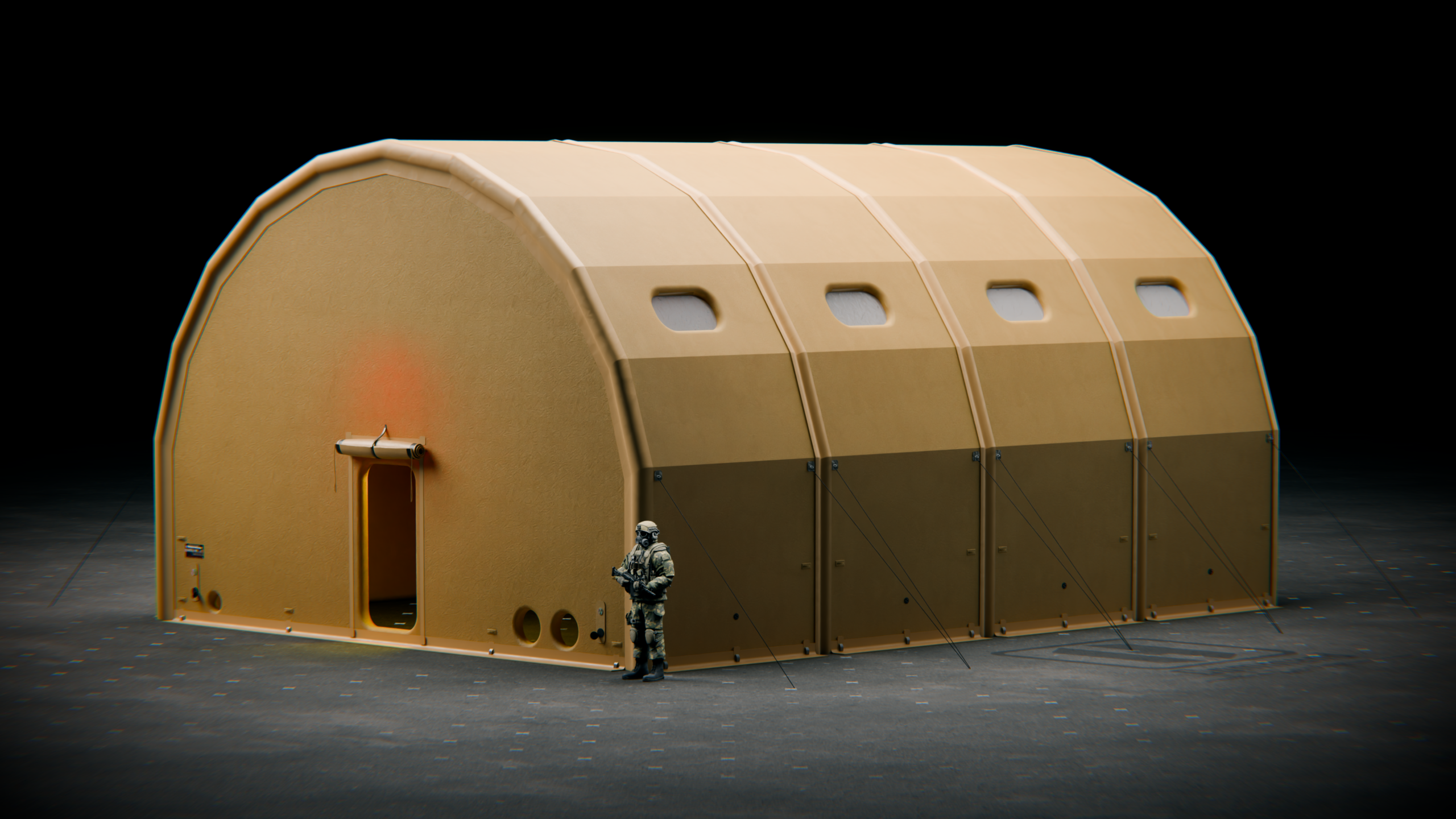
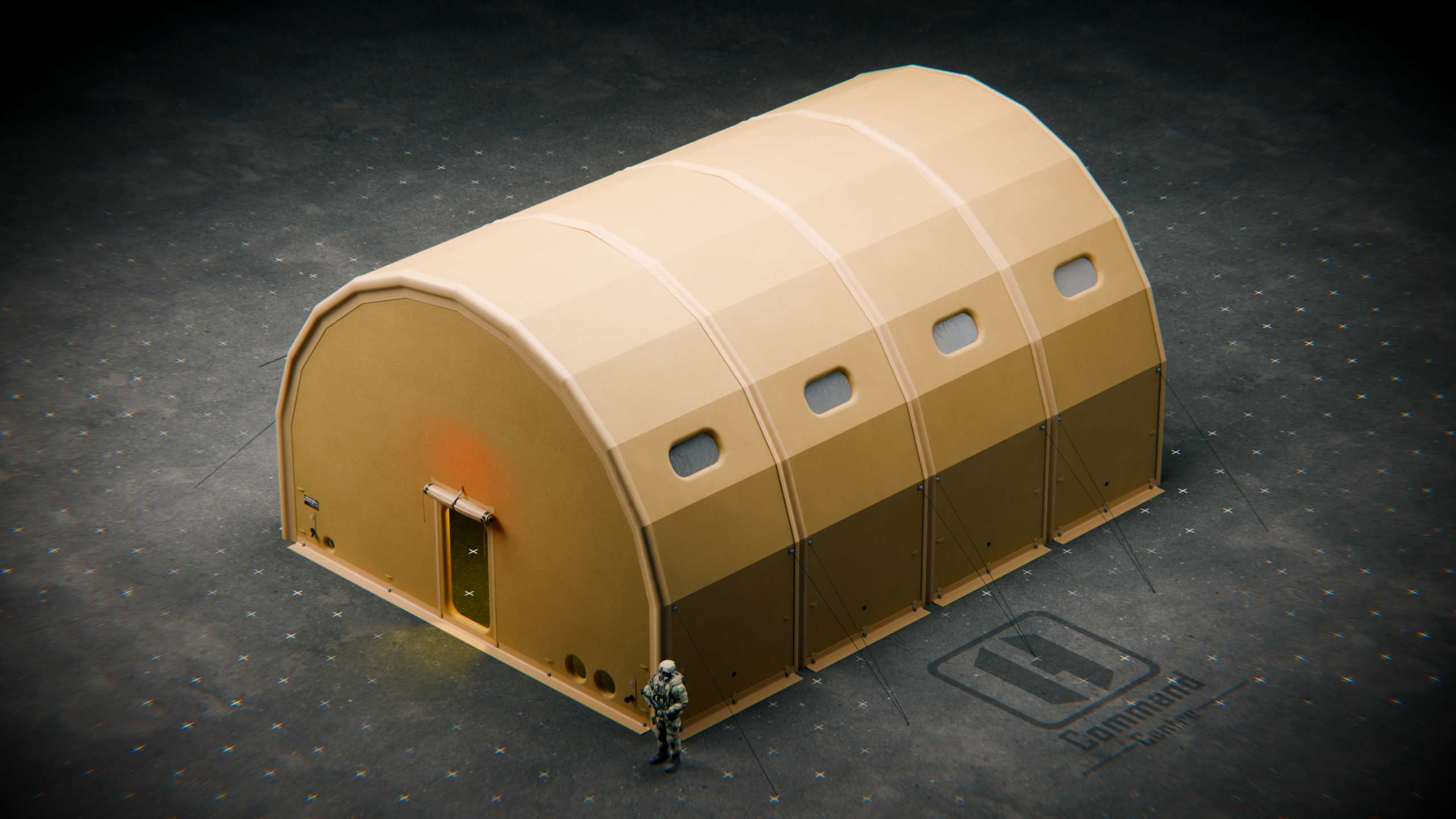
The Hardline JOC Shelter is an advanced inflatable command-and-control shelter engineered for defense, expeditionary, disaster response, and remote operational environments. Designed to provide a highly insulated, structurally robust, and rapidly deployable shelter envelope, the JOC creates a quiet, protected operational space for command teams working in extreme climates and contested environments.
Dimensional Overview
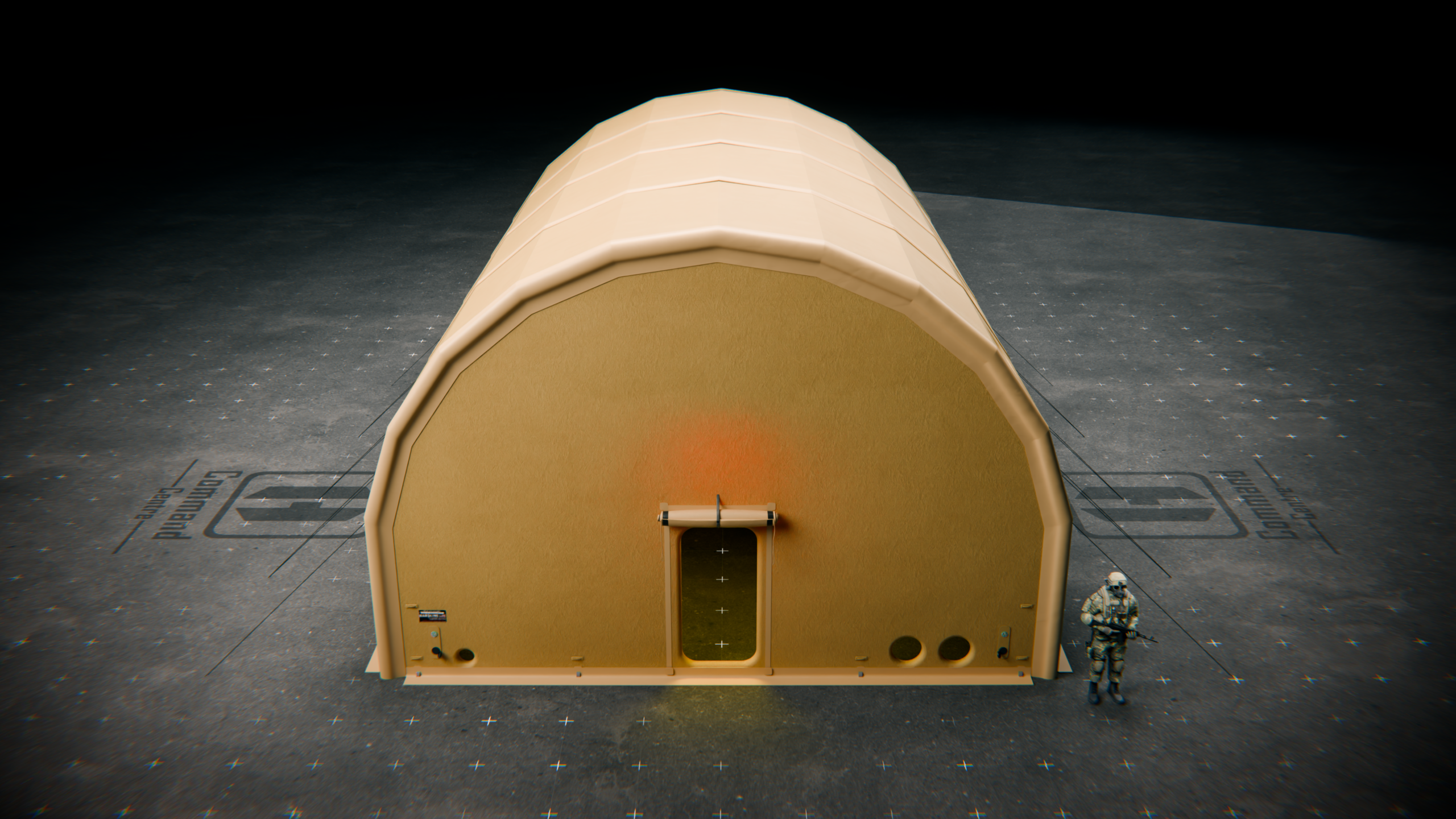
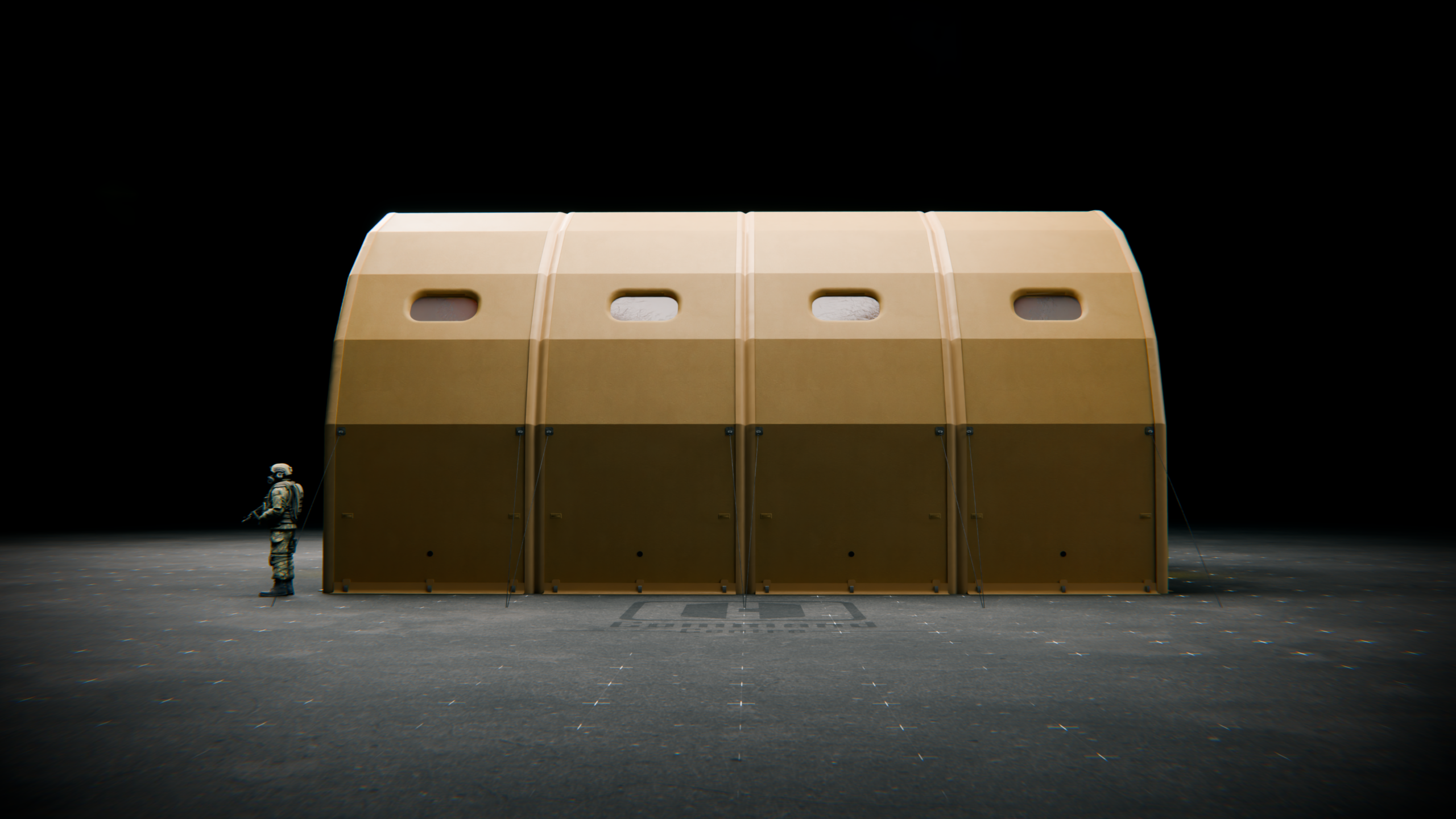
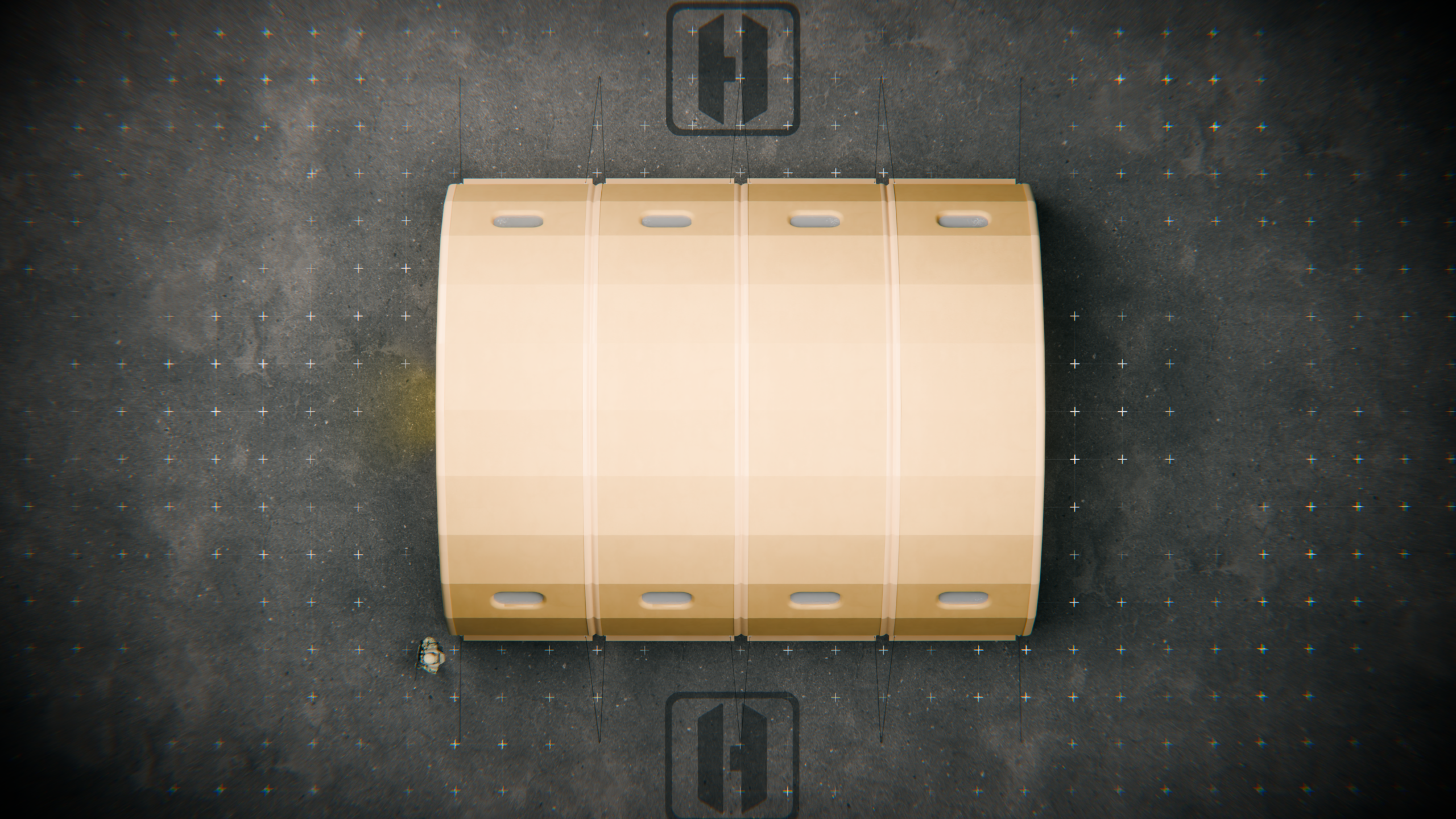
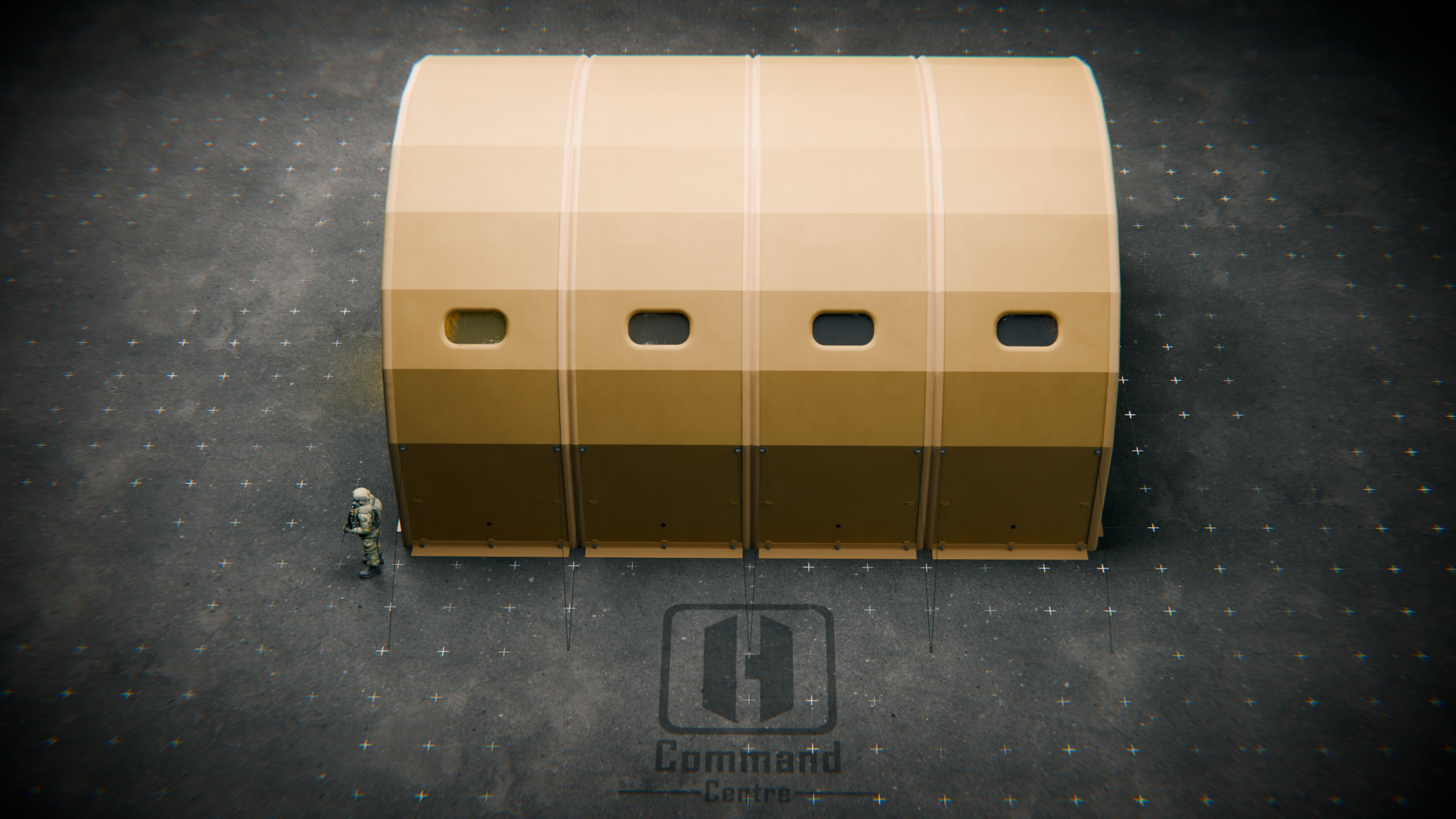
Metric: 8.9m wide x 12m long x 6.077m highImperial: 29'-2" wide x 40' long x 19'-11" high
The Hardline JOC Shelter provides a substantial enclosed environment for joint command operations, planning, communications, intelligence coordination, mission support, and leadership functions in the field.
Built for Joint Command in Harsh Environments
Modern command teams require more than a tent. They require a shelter system that reduces operational burden, protects personnel and equipment, supports communications infrastructure, and performs in extreme temperatures without generating unnecessary noise or thermal inefficiency.
The Hardline JOC Shelter has been developed to answer that requirement. Engineered with insulated air-gap construction, high-strength structural support architecture, and a rapidly deployable inflatable design, the shelter provides a protected internal environment that helps command personnel remain effective, focused, and operationally ready in demanding theatres.
Key Advantages
Extreme Cold CapabilityThe Hardline JOC Shelter is designed to operate in ambient exterior conditions down to -60 degrees, making it suitable for arctic, alpine, high-altitude, and severe winter deployments where conventional soft-wall shelters struggle to maintain internal usability.
Silent InsideThe insulated structural envelope helps create a significantly quieter internal environment than conventional field shelters. This improves command effectiveness by reducing noise intrusion, supporting clearer communication, reducing operator fatigue, and helping personnel maintain focus during sustained operations.
ADVANTAGEs CONTinued
Air-Gap InsulationA built-in insulated air-gap system across the shelter envelope helps reduce thermal transfer in both extreme cold and extreme heat. This improves internal climate control, reduces heating and cooling demand, lowers fuel burden, and supports more efficient ECU performance.
Mitigated Thermal SignaturesThe shelter is designed to help reduce the transmission of internal thermal signatures through the shelter envelope. Human activity, command equipment, electronics, and other heat-emitting assets housed within the shelter are better protected from outward thermal exposure than in conventional uninsulated field shelter systems.
Rapid DeploymentThe inflatable architecture enables rapid field deployment with reduced manpower and simplified logistics, helping operational teams establish command capability faster when time matters most.
Rigid, Stable Shelter EnvelopeHardline’s high-strength inflatable structural design delivers a robust and stable shelter form that supports mission continuity in difficult weather and austere terrain.
Reduced Energy BurdenBecause the shelter is insulated and structurally designed to better retain internal temperature, environmental control units do not need to work as hard or as often. This reduces fuel demand, lowers power burden, and supports quieter, more efficient forward operations.
Mission-Focused Interior SpaceWith its generous internal volume, the Hardline JOC Shelter can support command tables, communications equipment, tactical displays, planning boards, operator seating, power management systems, environmental control systems, and integrated mission support layouts.
Designed for Military and Operational Environments
- A quieter shelter means better communication and reduced fatigue
- Better insulation means improved comfort and sustained operational performance
- Reduced ECU demand means less fuel to move, store, and protect
- Thermal mitigation supports greater operational discretion
- Rapid deployment means faster mission readiness
- Extreme weather capability means command continuity where others fail
The result is a shelter that does not simply provide cover, but actively improves the command environment for the people inside it.
Designed for Modern Operational UseThe Hardline JOC Shelter is ideal for:
- Joint Operations Command
- Tactical command posts
- Forward command and control
- Intelligence and planning cells
- Communications hubs
- Mission coordination centres
- Border and remote security operations
- Humanitarian command centres
- Disaster response coordination shelters
The Hardline Difference
Hardline shelters are built for users who require more than temporary cover. They are engineered for serious environments, mission-critical use, and real operational outcomes. The Hardline JOC Shelter combines deployability, insulation, internal quiet, and thermal discretion into a single system that supports people, equipment, and command effectiveness where it matters most.When the mission demands a command shelter that can deploy fast, perform in extreme cold, reduce thermal burden, and support sustained operations, the Hardline JOC Shelter stands ready.

Proven Performance in Extreme Cold
Through extensive environmental testing and material selection, our products demonstrate reliable performance under conditions that challenge traditional equipment.