
Modular inflatable vehicle-transport and mission platform
Maritime operations often require long loiter times and stable platforms. The Manta Catamaran is an advanced, versatile capability for long-loiter maritime patrol, ferry logistics, or as an Unmanned Surface Vessel (USV).
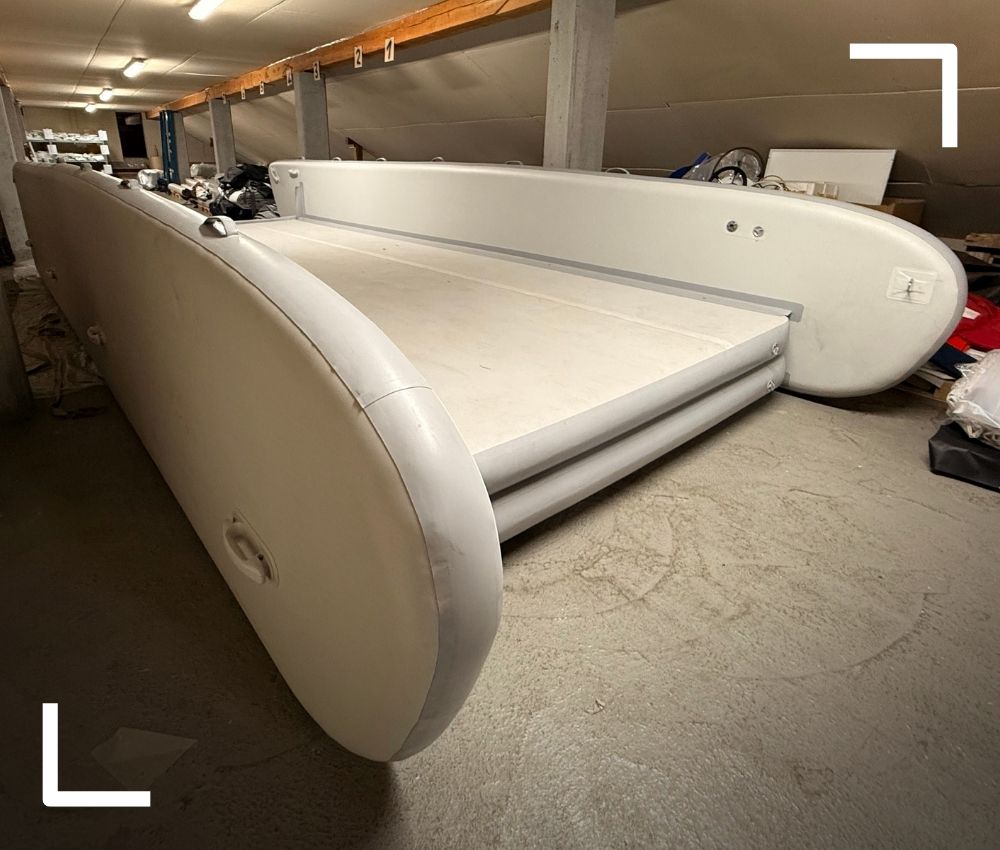
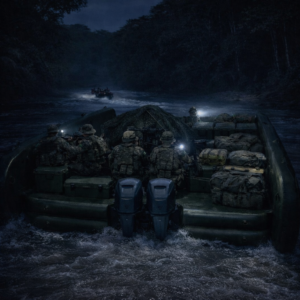
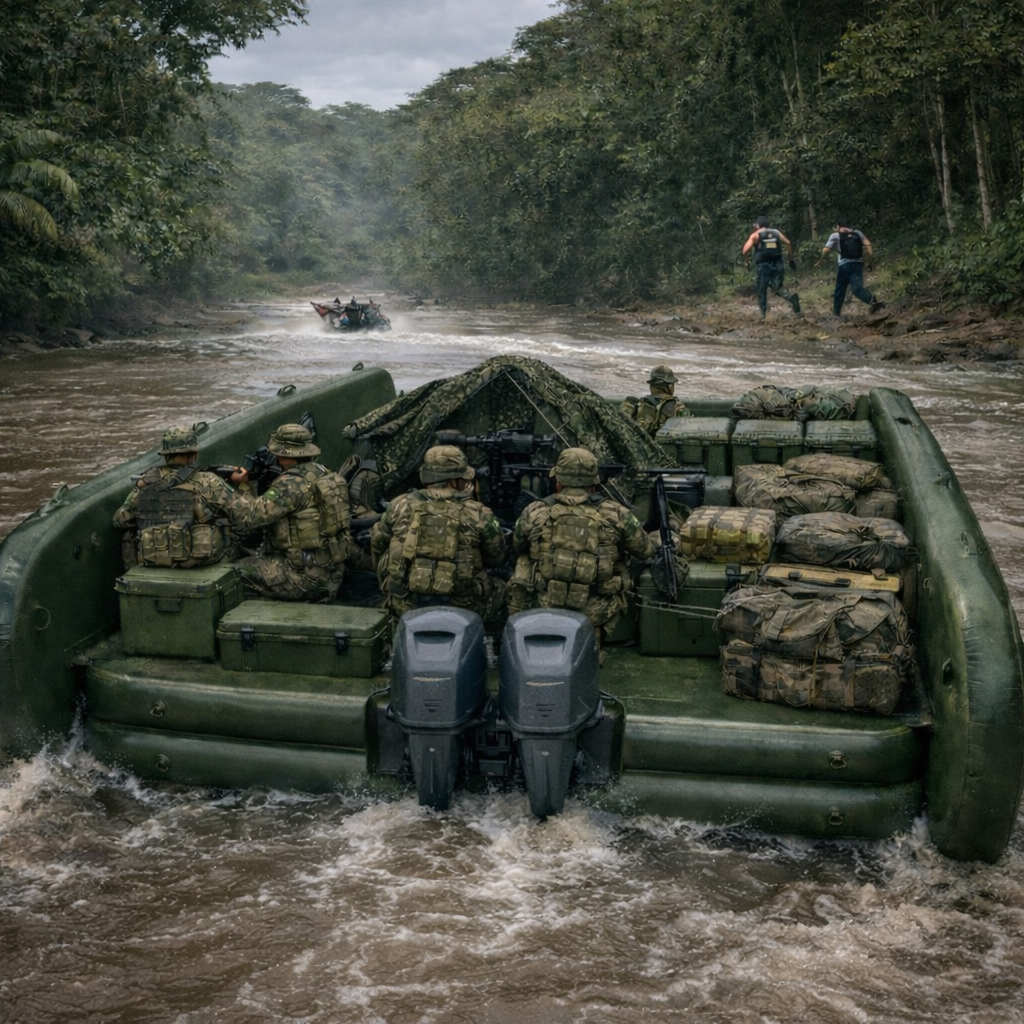
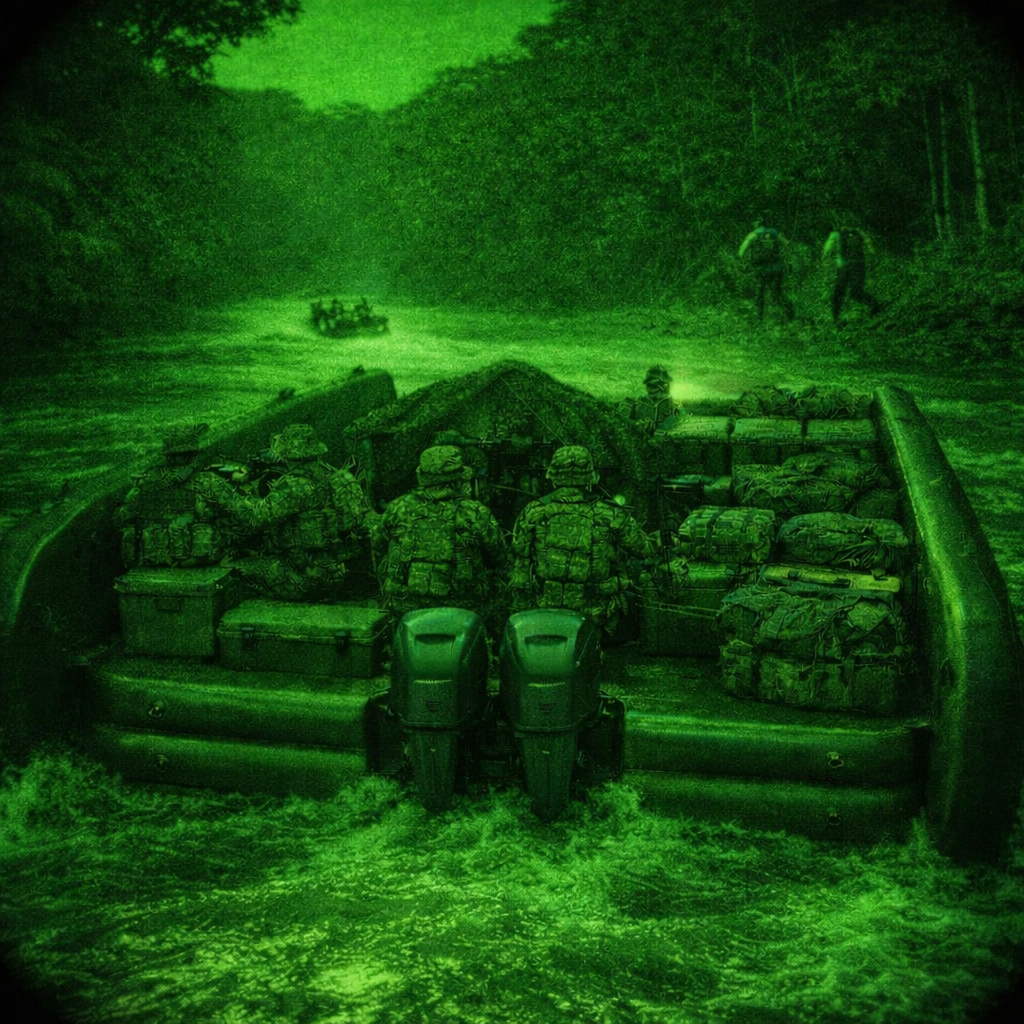
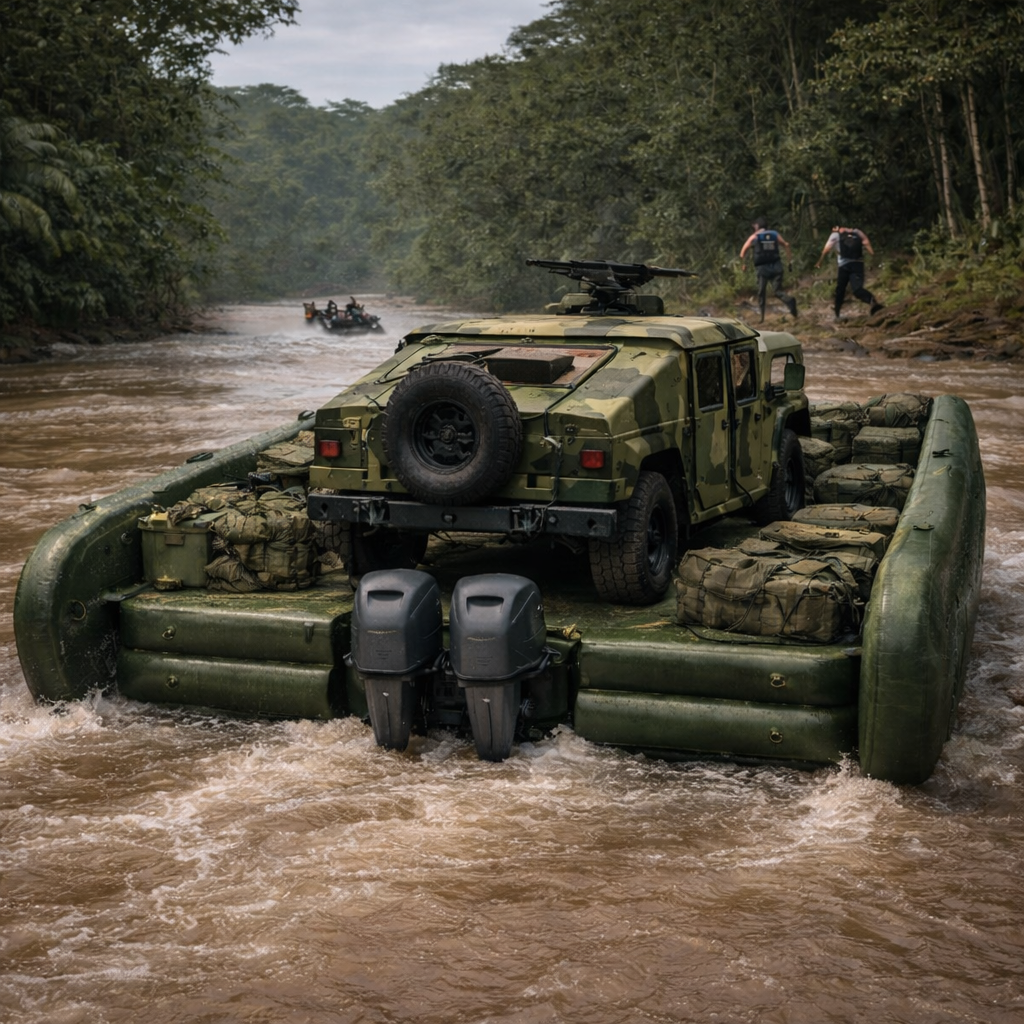
The Hardline Manta is a rapid-deploy inflatable catamaran engineered to keep expeditionary forces moving across rivers, littorals, and wet-gap terrain. Manta is available in multiple sizes and models, purpose-built to scale from agile logistics runs to vehicle and heavy cargo transport.
Enhancing Littoral Command and Control
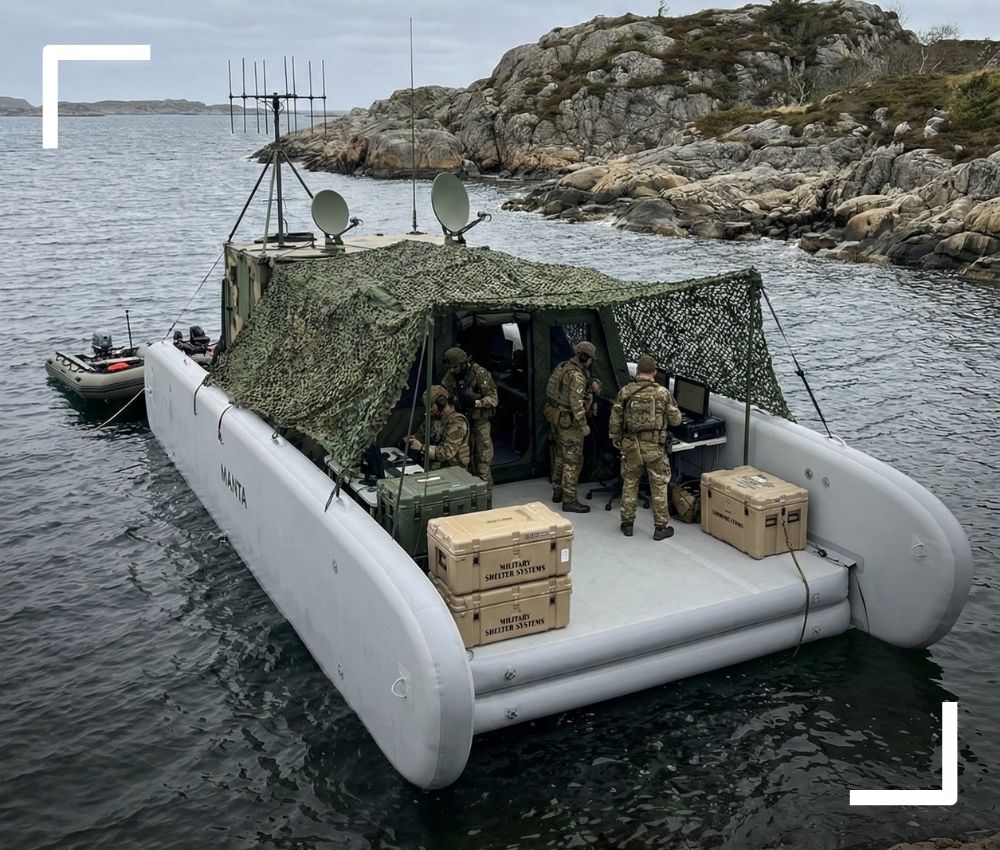
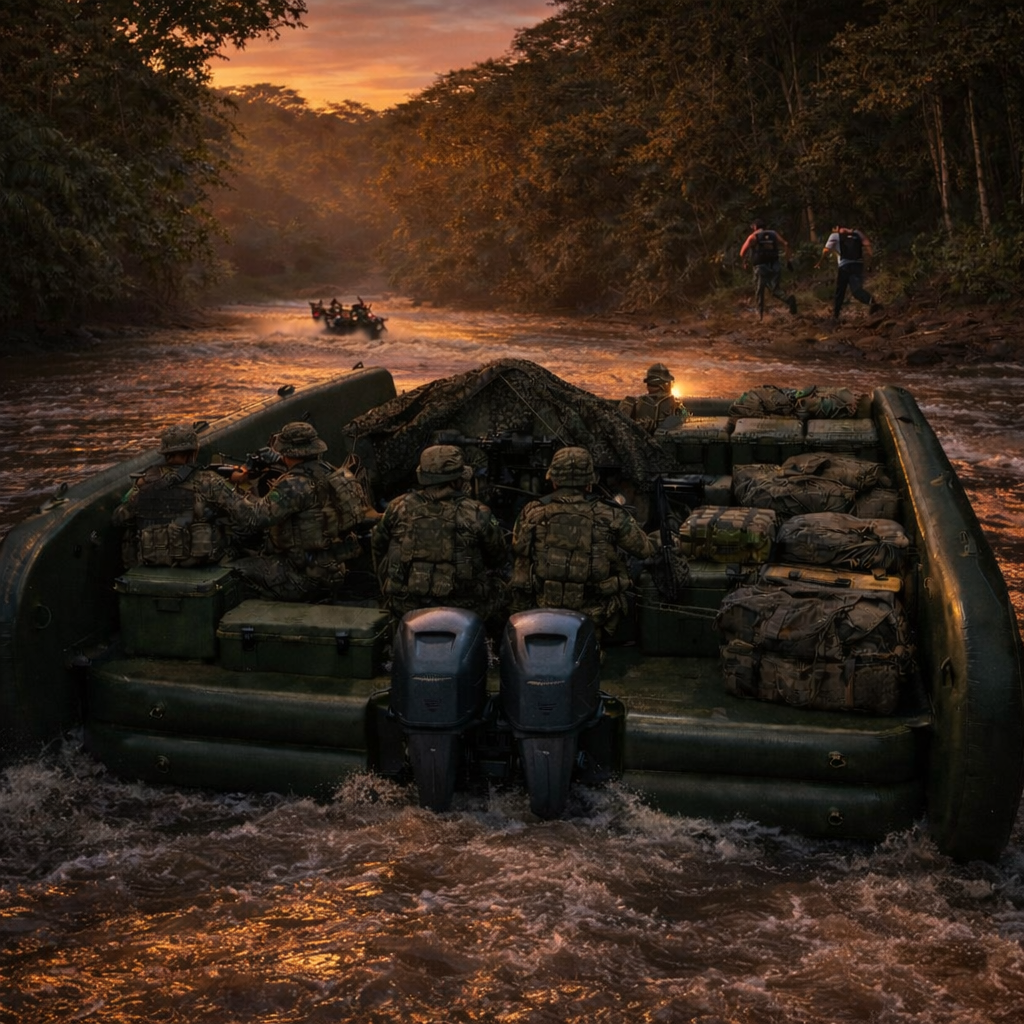
The Manta Catamaran acts as a vital forward node for coastal operations, extending the reach of a shore-based tactical operations center. Its exceptional stability and endurance make it the perfect platform to support remote field headquarters or isolated marine barracks requiring consistent resupply and data links. By bridging the gap between sea and shore, the Manta ensures that forward-deployed communications shelter outposts and military shelter systems remain fully operational and connected, even in contested maritime environments where traditional logistics chains are vulnerable.
Low cube, low weight
Manta packs down into low-cube duffle bags (vacuum-packable) for rapid deployment, easy transport, and forward staging.
Mission-fit deck and payload integration: mounts, sensors, and modular kits
Manta can be outfitted with mounting platforms to support:
-
Sensors / ISR payloads (radar, EO/IR, comms relays, passive monitoring)
-
Remote mounts and mission hardware (as allowed by customer compliance and export controls)
-
Command-and-control nodes and networked monitoring kits
The modern operational trend is toward modularity: platforms designed to accept mission “modules” (often containerised or standardised payload packages) that can be swapped as requirements change.
Where appropriate, Manta can also be paired with third-party systems designed for “mount-anywhere” integration concepts (for example, remote weapon system providers emphasise flexible mounting across platforms).
Practical integration options typically include:
-
Reinforced mounting zones (hardpoints / rails)
-
Power and data routing provisions (mission-kit dependent)
-
Tie-down matrices for cargo, cases, batteries, and comms stacks
Propulsion options: large-thrust, low-noise, or mission-specific
Manta is designed to accept propulsion that matches the mission profile:
-
Large outboards for high-thrust logistics movement
-
Smaller, quieter motors where signature and discretion matter
-
Configurations that support towing, station-keeping, or loiter roles (mission dependent)
This “fit-to-mission” propulsion approach mirrors what professional and military boat manufacturers highlight as a differentiator across workboat and inflatable ranges, where equipment and configuration are tailored to the task.
Enhancing Littoral Command and Control
The Manta Catamaran acts as a vital forward node for coastal operations, extending the reach of a shore-based tactical operations center. Its exceptional stability and endurance make it the perfect platform to support remote field headquarters or isolated marine barracks requiring consistent resupply and data links. By bridging the gap between sea and shore, the Manta ensures that forward-deployed communications shelter outposts and military shelter systems remain fully operational and connected, even in contested maritime environments where traditional logistics chains are vulnerable.
Maritime Support for Disaster Response
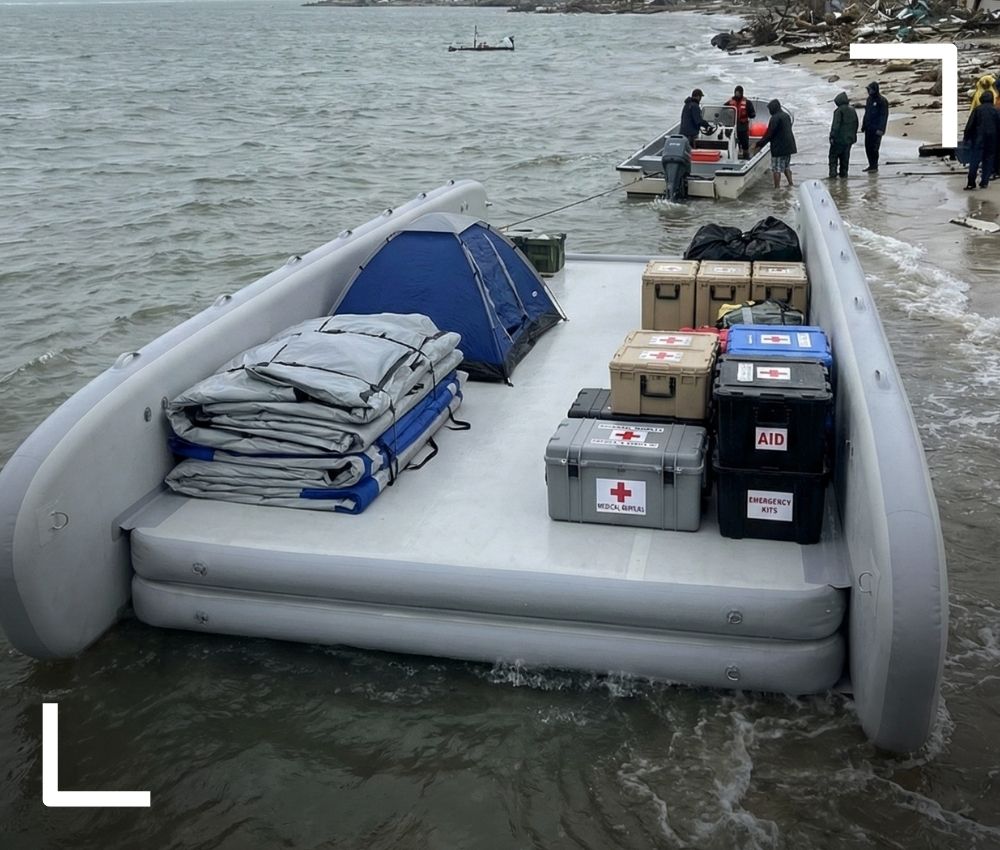
Beyond security missions, the Hardline Manta is a critical asset for delivering aid to hard-to-reach coastal areas. Its customizable payload capacity allows for the efficient transport of rapid deployment shelters and compact emergency shelter systems to islands cut off by storms. When local infrastructure fails, the Manta acts as a lifeline, delivering humanitarian shelters and medical supplies to support disaster relief shelter efforts. Whether ferrying deployable emergency shelter kits or serving as a mobile sensor hub, this platform ensures help reaches victims regardless of road conditions.
Why Choose the Manta?
It provides stability in various sea states and can be expanded for USV integration, making it a true multi-mission asset.
- Extended loiter times
- Customizable payloads (sensors, weapons)
- Onboard co-generation technology
- Ready for USV integration
About the Manta Catamaran
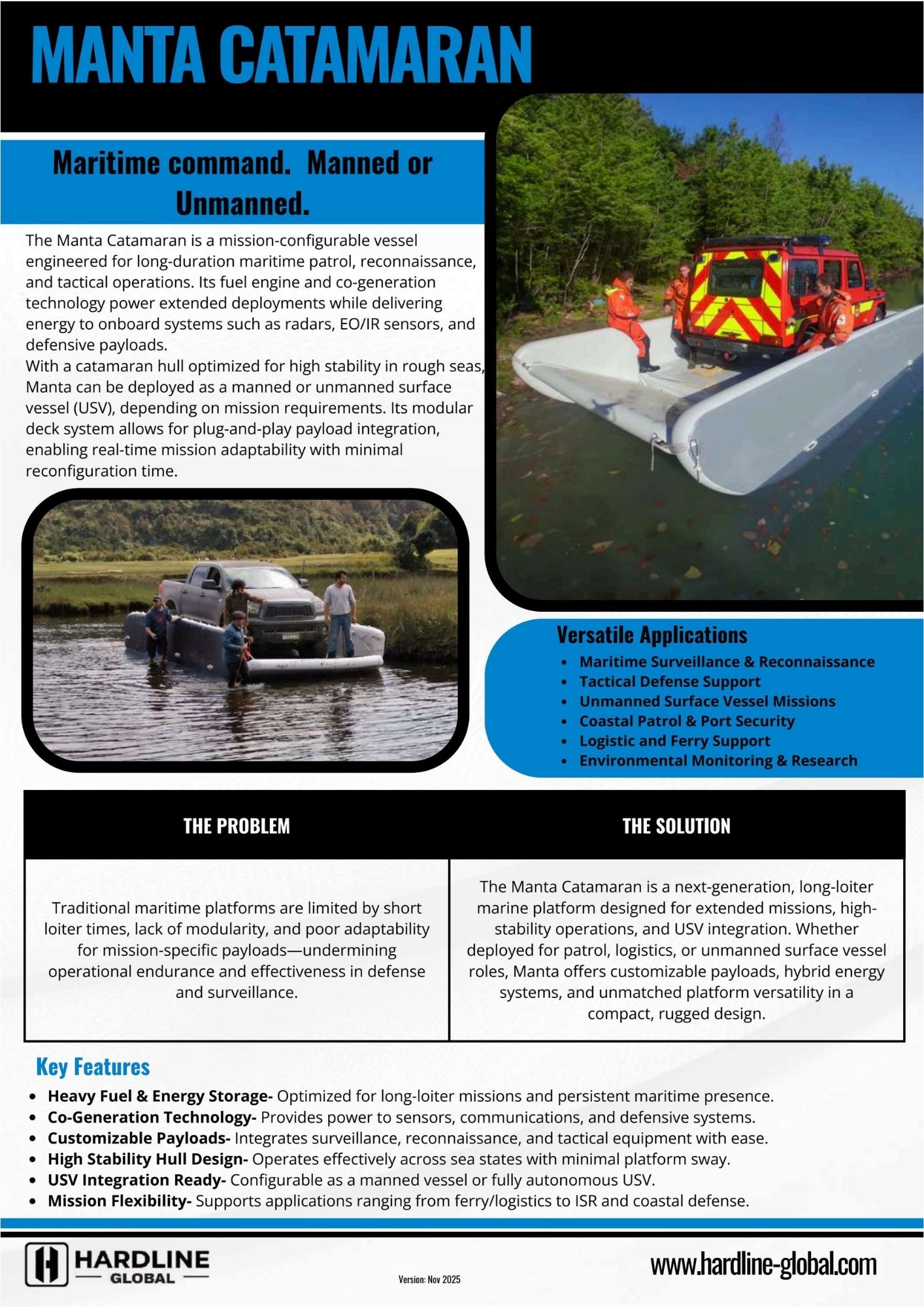
The Manta is designed for endurance. It supports heavy fuel and energy storage for extended operational durations and features co-generation technology to power onboard systems. Its stable platform is ideal for customizable payloads, including radar, sensors, and weaponry.
Expand Your Maritime Capability
For surveillance, defense, or reconnaissance, the Manta delivers. Contact Hardline to discuss your maritime requirements.